The selections highlighted in this section are just the tip of the iceberg! We have lots of print books in the CalArts Library.
Graphic novels, poetry, and Leisure Reading books are listed in the Critical Studies tab. Books about Anime and Manga can be found in the Film/Video tab.
Can't find what you want? Contact a librarian at libref@calarts.edu for help finding books on your favorite AAPI related topics!
 Yell-Oh Girls!
by
Culled from hundreds of submissions from all over the country, these poignant, honest, real, and surprising pieces on being Asian-American address such topics as culture clash, body image, interracial dating, adoption, and stereotypes.
Yell-Oh Girls!
by
Culled from hundreds of submissions from all over the country, these poignant, honest, real, and surprising pieces on being Asian-American address such topics as culture clash, body image, interracial dating, adoption, and stereotypes.
 Minor Feelings
by
A ruthlessly honest, emotionally charged, and utterly original exploration of Asian American consciousness and the struggle to be human. Hong blends memoir, cultural criticism, and history to expose the truth of racialized consciousness in America. She believes that "minor feelings" occur when American optimism contradicts your own reality-- when you believe the lies you're told about your own racial identity. -- adapted from jacket
Minor Feelings
by
A ruthlessly honest, emotionally charged, and utterly original exploration of Asian American consciousness and the struggle to be human. Hong blends memoir, cultural criticism, and history to expose the truth of racialized consciousness in America. She believes that "minor feelings" occur when American optimism contradicts your own reality-- when you believe the lies you're told about your own racial identity. -- adapted from jacket
 The Dead Eye and the Deep Blue Sea
by
Too poor to pay his pregnant wife's hospital bill, Prum Vannak left his village in Cambodia to seek work in Thailand. Men who appeared to be employers on a fishing vessel promised to return him home after a few months at sea, but instead Vannak was hostaged on the vessel for four years of hard labor. Amid violence and cruelty, including frequent beheadings, Vannak survived in large part by honing his ability to tattoo his shipmates--a skill he possessed despite never having been trained in art or having had access to art supplies while growing up. As a means of escape, Vannak and a friend jumped into the water and, hugging empty fish-sauce containers because they could not swim, reached Malaysia in the dark of night. At the harbor, they were taken into a police station . . . then sold by their rescuers to work on a plantation. Vannak was kept as a laborer for over a year before an NGO could secure his return to Cambodia. After five years away, Vannak was finally reunited with his family. Vannak documented his ordeal in raw, colorful, detailed illustrations, first created because he believed that without them no one would believe his story. Indeed, very little is known about what happens to the men and boys who end up working on fishing boats in Asia, and these images are some of the first records. In regional Cambodia, many families still wait for men who have disappeared across the Thai border, and out to sea. The Dead Eye and the Deep Blue Sea is a testament to the lives of these many fishermen who are trapped on boats in the Indian Ocean.
The Dead Eye and the Deep Blue Sea
by
Too poor to pay his pregnant wife's hospital bill, Prum Vannak left his village in Cambodia to seek work in Thailand. Men who appeared to be employers on a fishing vessel promised to return him home after a few months at sea, but instead Vannak was hostaged on the vessel for four years of hard labor. Amid violence and cruelty, including frequent beheadings, Vannak survived in large part by honing his ability to tattoo his shipmates--a skill he possessed despite never having been trained in art or having had access to art supplies while growing up. As a means of escape, Vannak and a friend jumped into the water and, hugging empty fish-sauce containers because they could not swim, reached Malaysia in the dark of night. At the harbor, they were taken into a police station . . . then sold by their rescuers to work on a plantation. Vannak was kept as a laborer for over a year before an NGO could secure his return to Cambodia. After five years away, Vannak was finally reunited with his family. Vannak documented his ordeal in raw, colorful, detailed illustrations, first created because he believed that without them no one would believe his story. Indeed, very little is known about what happens to the men and boys who end up working on fishing boats in Asia, and these images are some of the first records. In regional Cambodia, many families still wait for men who have disappeared across the Thai border, and out to sea. The Dead Eye and the Deep Blue Sea is a testament to the lives of these many fishermen who are trapped on boats in the Indian Ocean.
 Deep Singh Blue
by
Deep Singh wants out -- out of his family, out of his city, and more than anything, out of his life. His parents argue over everything and his brother, who hasn't said a single word in over a year, suddenly turns to him one day and tells him to die. So when Lily, a beautiful, older, and married, woman, shows him more than a flicker of attention, he falls heedlessly in love. It doesn't help that Lily is an alcoholic, hates her husband, and doesn't think much of herself, or her immigrant Chinese mom either. As Deep's growing obsession with Lily begins to spin out of control, the rest of his life seems to mirror his desperation -- culminating in his brother's disappearance and an unfolding tragedy. Ranbir Singh Sidhu's debut takes us into the heart of another America, and into the lives of "the other Indians--the ones who don't get talked about and whose stories don't get written." With a sharp, funny and unsentimental eye, Sidhu chronicles the devastating consequences of racism in eighties' America and offers a portrait of a wildly dysfunctional family trying to gain a foothold in their adopted country.
Deep Singh Blue
by
Deep Singh wants out -- out of his family, out of his city, and more than anything, out of his life. His parents argue over everything and his brother, who hasn't said a single word in over a year, suddenly turns to him one day and tells him to die. So when Lily, a beautiful, older, and married, woman, shows him more than a flicker of attention, he falls heedlessly in love. It doesn't help that Lily is an alcoholic, hates her husband, and doesn't think much of herself, or her immigrant Chinese mom either. As Deep's growing obsession with Lily begins to spin out of control, the rest of his life seems to mirror his desperation -- culminating in his brother's disappearance and an unfolding tragedy. Ranbir Singh Sidhu's debut takes us into the heart of another America, and into the lives of "the other Indians--the ones who don't get talked about and whose stories don't get written." With a sharp, funny and unsentimental eye, Sidhu chronicles the devastating consequences of racism in eighties' America and offers a portrait of a wildly dysfunctional family trying to gain a foothold in their adopted country.
 The Best We Could Do
by
"Exploring the anguish of immigration and the lasting effects that displacement has on a child and her family, Bui documents the story of her family's daring escape after the fall of South Vietnam in the 1970s, and the difficulties they faced building new lives for themselves"--Publisher description.
The Best We Could Do
by
"Exploring the anguish of immigration and the lasting effects that displacement has on a child and her family, Bui documents the story of her family's daring escape after the fall of South Vietnam in the 1970s, and the difficulties they faced building new lives for themselves"--Publisher description.
 Strange Beasts of China
by
"From one of the most exciting voices in contemporary Chinese literature, an uncanny and playful bestiary that blurs the line between human and beast ... In the fictional Chinese city of Yong'an, an amateur cryptozoologist is commissioned to uncover the stories of its fabled beasts. These creatures live alongside humans in near-inconspicuousness--save their greenish skin, serrated earlobes, and strange birthmarks. Aided by her elusive former professor and his enigmatic assistant, our narrator sets off to document each beast, and is slowly drawn deeper into a mystery that threatens her very sense of self. Part detective story, part metaphysical inquiry, Strange Beasts of China engages existential questions of identity, humanity, love, and morality with whimsy and stylistic verve. First published in the UK by Tilted Axis"-- Provided by publisher.
Strange Beasts of China
by
"From one of the most exciting voices in contemporary Chinese literature, an uncanny and playful bestiary that blurs the line between human and beast ... In the fictional Chinese city of Yong'an, an amateur cryptozoologist is commissioned to uncover the stories of its fabled beasts. These creatures live alongside humans in near-inconspicuousness--save their greenish skin, serrated earlobes, and strange birthmarks. Aided by her elusive former professor and his enigmatic assistant, our narrator sets off to document each beast, and is slowly drawn deeper into a mystery that threatens her very sense of self. Part detective story, part metaphysical inquiry, Strange Beasts of China engages existential questions of identity, humanity, love, and morality with whimsy and stylistic verve. First published in the UK by Tilted Axis"-- Provided by publisher.
 O. B. b
by
OBB a.k.a. The Original Brown Boy has many identities: it is a comics poem and a manifesto on comics poetry; an experimental comic book sequel to a poem twenty years in the making; and an homage to the Mimeo Revolution, weird fiction, kamishibai, the political cartoon, Pilipinx komiks history, and the poet bp Nichol. Javier deconstructs a post-9/11 Pilipinx identity amid the lasting fog of the Philippine American War, to compose a far-out comic book awit.
O. B. b
by
OBB a.k.a. The Original Brown Boy has many identities: it is a comics poem and a manifesto on comics poetry; an experimental comic book sequel to a poem twenty years in the making; and an homage to the Mimeo Revolution, weird fiction, kamishibai, the political cartoon, Pilipinx komiks history, and the poet bp Nichol. Javier deconstructs a post-9/11 Pilipinx identity amid the lasting fog of the Philippine American War, to compose a far-out comic book awit.
 Speaking of the Self
by
Many consider the autobiography to be a Western genre that represents the self as fully autonomous. The contributors to Speaking of the Self challenge this presumption by examining a wide range of women's autobiographical writing from South Asia. Expanding the definition of what kinds of writing can be considered autobiographical, the contributors analyze everything from poetry, songs, mystical experiences, and diaries to prose, fiction, architecture, and religious treatises. The authors they study are just as diverse: a Mughal princess, an eighteenth-century courtesan from Hyderabad, a nineteenth-century Muslim prostitute in Punjab, a housewife in colonial Bengal, a Muslim Gandhian devotee of Krishna, several female Indian and Pakistani novelists, and two male actors who worked as female impersonators. The contributors find that in these autobiographies the authors construct their gendered selves in relational terms. Throughout, they show how autobiographical writing--in whatever form it takes--provides the means toward more fully understanding the historical, social, and cultural milieu in which the author performs herself and creates her subjectivity.
Speaking of the Self
by
Many consider the autobiography to be a Western genre that represents the self as fully autonomous. The contributors to Speaking of the Self challenge this presumption by examining a wide range of women's autobiographical writing from South Asia. Expanding the definition of what kinds of writing can be considered autobiographical, the contributors analyze everything from poetry, songs, mystical experiences, and diaries to prose, fiction, architecture, and religious treatises. The authors they study are just as diverse: a Mughal princess, an eighteenth-century courtesan from Hyderabad, a nineteenth-century Muslim prostitute in Punjab, a housewife in colonial Bengal, a Muslim Gandhian devotee of Krishna, several female Indian and Pakistani novelists, and two male actors who worked as female impersonators. The contributors find that in these autobiographies the authors construct their gendered selves in relational terms. Throughout, they show how autobiographical writing--in whatever form it takes--provides the means toward more fully understanding the historical, social, and cultural milieu in which the author performs herself and creates her subjectivity.
 Babaylan
by
As the first international anthology of Filipina writers published in the United States, BABAYLAN reflects the complex history of a people whose roots have stretched to both sides of the globe. The voices represented in this collection offer a broad and varied perspective on the Filipina writer whose diasporic existence is a living, breathing bridge, not only between countries but also generations, as strong voices from the past fuel realities of the future. As a result, vibrant and original art, the trademark of Filipina writers perpetually emerges and evolves. With contributions from over 60 writers--both Filipina and Filipina American--BABAYLAN provides readers with a comprehensive view of a growing and vibrant transnational literary culture. Challenging. Innovative. Fierce and reflective. Somber and funny. No one word can capture the extraordinary range of this collection.
Babaylan
by
As the first international anthology of Filipina writers published in the United States, BABAYLAN reflects the complex history of a people whose roots have stretched to both sides of the globe. The voices represented in this collection offer a broad and varied perspective on the Filipina writer whose diasporic existence is a living, breathing bridge, not only between countries but also generations, as strong voices from the past fuel realities of the future. As a result, vibrant and original art, the trademark of Filipina writers perpetually emerges and evolves. With contributions from over 60 writers--both Filipina and Filipina American--BABAYLAN provides readers with a comprehensive view of a growing and vibrant transnational literary culture. Challenging. Innovative. Fierce and reflective. Somber and funny. No one word can capture the extraordinary range of this collection.
 Un-American
by
In 1942 more than 109,000 Japanese Americans, including 70,000 U.S. citizens, were picked up and sent to incarceration centers, most for the duration of the war. It was the shame of America-- and it was documented on film. Cahan and Williams provide a visual history which includes interviews with many of the people reflecting on their experiences.
Un-American
by
In 1942 more than 109,000 Japanese Americans, including 70,000 U.S. citizens, were picked up and sent to incarceration centers, most for the duration of the war. It was the shame of America-- and it was documented on film. Cahan and Williams provide a visual history which includes interviews with many of the people reflecting on their experiences.
 In Other Rooms Other Wonders
by
Passing from the mannered drawing rooms of Pakistan's cities to the harsh mud villages beyond, Daniyal Mueenuddin's linked stories describe the interwoven lives of an aging feudal landowner, his servants and managers, and his extended family, industrialists who have lost touch with the land. Refined, sensuous, by turns humorous, elegiac, and tragic, Mueenuddin evokes the complexities of the Pakistani feudal order as it is undermined and transformed.
In Other Rooms Other Wonders
by
Passing from the mannered drawing rooms of Pakistan's cities to the harsh mud villages beyond, Daniyal Mueenuddin's linked stories describe the interwoven lives of an aging feudal landowner, his servants and managers, and his extended family, industrialists who have lost touch with the land. Refined, sensuous, by turns humorous, elegiac, and tragic, Mueenuddin evokes the complexities of the Pakistani feudal order as it is undermined and transformed.
 Yuichi Yokoyama: World Map Room
by
Men visit a city. They watch aeroplanes departing and arriving at an airport. They go on board a ship and across a river. Finally they arrive at the building that is their destination. A man guides them to the world map room'. It seems they have an appointment there, although there is no description about the appointment. They see the books on the shelves and have some desultory conversation. Then they go to the courtyard and carry on the conversation. They reach a pond with a sunken ship. The guide starts to explain the ship's history. The book ends.'
Yuichi Yokoyama: World Map Room
by
Men visit a city. They watch aeroplanes departing and arriving at an airport. They go on board a ship and across a river. Finally they arrive at the building that is their destination. A man guides them to the world map room'. It seems they have an appointment there, although there is no description about the appointment. They see the books on the shelves and have some desultory conversation. Then they go to the courtyard and carry on the conversation. They reach a pond with a sunken ship. The guide starts to explain the ship's history. The book ends.'
 Thank You, Mr. Nixon
by
The acclaimed, award-winning author of The Resisters takes measure of the fifty years since the opening of China and its unexpected effects on the lives of ordinary people. It is a unique book that only Jen could write--a story collection accruing the power of a novel as it proceeds--a work that Cynthia Ozick has called "an art beyond art. It is life itself." Beginning with a cheery letter penned by a Chinese girl in heaven to "poor Mr. Nixon" in hell, Gish Jen embarks on a fictional journey through U.S.-China relations, capturing the excitement of a world on the brink of tectonic change. Opal Chen reunites with her Chinese sisters after forty years; newly cosmopolitan Lulu Koo wonders why Americans "like to walk around in the woods with the mosquitoes"; Hong Kong parents go to extreme lengths to reestablish contact with their "number-one daughter" in New York; and Betty Koo, brought up on "no politics, just make money," finds she must reassess her mother's philosophy. With their profound compassion and equally profound humor, these eleven linked stories trace the intimate ways in which humans make and are made by history, capturing an extraordinary era in an extraordinary way. Delightful, provocative, and powerful, Thank You, Mr. Nixon furnishes yet more proof of Gish Jen's eminent place among American storytellers.
Thank You, Mr. Nixon
by
The acclaimed, award-winning author of The Resisters takes measure of the fifty years since the opening of China and its unexpected effects on the lives of ordinary people. It is a unique book that only Jen could write--a story collection accruing the power of a novel as it proceeds--a work that Cynthia Ozick has called "an art beyond art. It is life itself." Beginning with a cheery letter penned by a Chinese girl in heaven to "poor Mr. Nixon" in hell, Gish Jen embarks on a fictional journey through U.S.-China relations, capturing the excitement of a world on the brink of tectonic change. Opal Chen reunites with her Chinese sisters after forty years; newly cosmopolitan Lulu Koo wonders why Americans "like to walk around in the woods with the mosquitoes"; Hong Kong parents go to extreme lengths to reestablish contact with their "number-one daughter" in New York; and Betty Koo, brought up on "no politics, just make money," finds she must reassess her mother's philosophy. With their profound compassion and equally profound humor, these eleven linked stories trace the intimate ways in which humans make and are made by history, capturing an extraordinary era in an extraordinary way. Delightful, provocative, and powerful, Thank You, Mr. Nixon furnishes yet more proof of Gish Jen's eminent place among American storytellers.
 Nothing Ever Dies
by
All wars are fought twice, the first time on the battlefield, the second time in memory. From the author of the Pulitzer Prize?winning novel The Sympathizer comes a searching exploration of the conflict Americans call the Vietnam War and Vietnamese call the American War?a conflict that lives on in the collective memory of both nations. From a kaleidoscope of cultural forms?novels, memoirs, cemeteries, monuments, films, photography, museum exhibits, video games, souvenirs, and more?Nothing Ever Dies brings a comprehensive vision of the war into sharp focus. At stake are ethical questions about how the war should be remembered by participants that include not only Americans and Vietnamese but also Laotians, Cambodians, South Koreans, and Southeast Asian Americans. Too often, memorials valorize the experience of one's own people above all else, honoring their sacrifices while demonizing the ?enemy??or, most often, ignoring combatants and civilians on the other side altogether. Visiting sites across the United States, Southeast Asia, and Korea, Viet Thanh Nguyen provides penetrating interpretations of the way memories of the war help to enable future wars or struggle to prevent them. Drawing from this war, Nguyen offers a lesson for all wars by calling on us to recognize not only our shared humanity but our ever-present inhumanity. This is the only path to reconciliation with our foes, and with ourselves. Without reconciliation, war's truth will be impossible to remember, and war's trauma impossible to forget.
Nothing Ever Dies
by
All wars are fought twice, the first time on the battlefield, the second time in memory. From the author of the Pulitzer Prize?winning novel The Sympathizer comes a searching exploration of the conflict Americans call the Vietnam War and Vietnamese call the American War?a conflict that lives on in the collective memory of both nations. From a kaleidoscope of cultural forms?novels, memoirs, cemeteries, monuments, films, photography, museum exhibits, video games, souvenirs, and more?Nothing Ever Dies brings a comprehensive vision of the war into sharp focus. At stake are ethical questions about how the war should be remembered by participants that include not only Americans and Vietnamese but also Laotians, Cambodians, South Koreans, and Southeast Asian Americans. Too often, memorials valorize the experience of one's own people above all else, honoring their sacrifices while demonizing the ?enemy??or, most often, ignoring combatants and civilians on the other side altogether. Visiting sites across the United States, Southeast Asia, and Korea, Viet Thanh Nguyen provides penetrating interpretations of the way memories of the war help to enable future wars or struggle to prevent them. Drawing from this war, Nguyen offers a lesson for all wars by calling on us to recognize not only our shared humanity but our ever-present inhumanity. This is the only path to reconciliation with our foes, and with ourselves. Without reconciliation, war's truth will be impossible to remember, and war's trauma impossible to forget.
 Crying in H Mart
by
"From the indie rockstar of Japanese Breakfast fame, and author of the viral 2018 New Yorker essay that shares the title of this book, an unflinching, powerful memoir about growing up Korean-American, losing her mother, and forging her own identity. In this exquisite story of family, food, grief, and endurance, Michelle Zauner proves herself far more than a dazzling singer, songwriter, and guitarist. With humor and heart, she tells of growing up the only Asian-American kid at her school in Eugene, Oregon; of struggling with her mother's particular, high expectations of her; of a painful adolescence; of treasured months spent in her grandmother's tiny apartment in Seoul, where she and her mother would bond, late at night, over heaping plates of food. As she grew up, moving to the east coast for college, finding work in the restaurant industry, performing gigs with her fledgling band--and meeting the man who would become her husband--her Koreanness began to feel ever more distant, even as she found the life she wanted to live. It was her mother's diagnosis of terminal pancreatic cancer, when Michelle was twenty-five, that forced a reckoning with her identity and brought her to reclaim the gifts of taste, language, and history her mother had given her. Vivacious and plainspoken, lyrical and honest, Michelle Zauner's voice is as radiantly alive on the page as it is onstage. Rich with intimate anecdotes that will resonate widely, and complete with family photos, Crying in H Mart is a book to cherish, share, and reread."-- Provided by publisher
Crying in H Mart
by
"From the indie rockstar of Japanese Breakfast fame, and author of the viral 2018 New Yorker essay that shares the title of this book, an unflinching, powerful memoir about growing up Korean-American, losing her mother, and forging her own identity. In this exquisite story of family, food, grief, and endurance, Michelle Zauner proves herself far more than a dazzling singer, songwriter, and guitarist. With humor and heart, she tells of growing up the only Asian-American kid at her school in Eugene, Oregon; of struggling with her mother's particular, high expectations of her; of a painful adolescence; of treasured months spent in her grandmother's tiny apartment in Seoul, where she and her mother would bond, late at night, over heaping plates of food. As she grew up, moving to the east coast for college, finding work in the restaurant industry, performing gigs with her fledgling band--and meeting the man who would become her husband--her Koreanness began to feel ever more distant, even as she found the life she wanted to live. It was her mother's diagnosis of terminal pancreatic cancer, when Michelle was twenty-five, that forced a reckoning with her identity and brought her to reclaim the gifts of taste, language, and history her mother had given her. Vivacious and plainspoken, lyrical and honest, Michelle Zauner's voice is as radiantly alive on the page as it is onstage. Rich with intimate anecdotes that will resonate widely, and complete with family photos, Crying in H Mart is a book to cherish, share, and reread."-- Provided by publisher
 In the Country
by
In these nine globe-trotting tales, Mia Alvar gives voice to the women and men of the Philippines and its diaspora. From teachers to housemaids, from mothers to sons, Alvar's stories explore the universal experiences of loss, displacement, and the longing to connect across borders both real and imagined. In the Country speaks to the heart of everyone who has ever searched for a place to call home--and marks the arrival of a formidable new voice in literature.
In the Country
by
In these nine globe-trotting tales, Mia Alvar gives voice to the women and men of the Philippines and its diaspora. From teachers to housemaids, from mothers to sons, Alvar's stories explore the universal experiences of loss, displacement, and the longing to connect across borders both real and imagined. In the Country speaks to the heart of everyone who has ever searched for a place to call home--and marks the arrival of a formidable new voice in literature.
 Sea People
by
"For more than a millennium, Polynesians occupied the remotest islands in the Pacific Ocean, an enormous triangle stretching from Hawaii to New Zealand to Easter Island. Sailing in large, double-hulled canoes, without the benefit of maps, writing, or metal tools, these ancient mariners were the first and, until the era of European discovery, the only people ever to have reached this part of the globe. Today, they are widely acknowledged as the world's greatest navigators. But how did the earliest Polynesians reach these far-flung islands? How did they conquer the largest ocean on the planet? Diving deep into the history of the Pacific, Christina Thompson explores this epic migration, following the trail of the many sailors, linguists, archaeologists, and geographers who have puzzled over this story, in a quest to discover who these ancient voyagers were, where they came from, and how they managed to colonize every habitable island in the vast region of remote Oceania. [This book] combines the wonder of pursuit and the drama of a gripping historical puzzle in a vivid tour of one of the most captivating regions in the world."-- taken from book jacket
Sea People
by
"For more than a millennium, Polynesians occupied the remotest islands in the Pacific Ocean, an enormous triangle stretching from Hawaii to New Zealand to Easter Island. Sailing in large, double-hulled canoes, without the benefit of maps, writing, or metal tools, these ancient mariners were the first and, until the era of European discovery, the only people ever to have reached this part of the globe. Today, they are widely acknowledged as the world's greatest navigators. But how did the earliest Polynesians reach these far-flung islands? How did they conquer the largest ocean on the planet? Diving deep into the history of the Pacific, Christina Thompson explores this epic migration, following the trail of the many sailors, linguists, archaeologists, and geographers who have puzzled over this story, in a quest to discover who these ancient voyagers were, where they came from, and how they managed to colonize every habitable island in the vast region of remote Oceania. [This book] combines the wonder of pursuit and the drama of a gripping historical puzzle in a vivid tour of one of the most captivating regions in the world."-- taken from book jacket
 The Golden Legend
by
When shots ring out on the Grand Trunk Road in the fictional Pakistani city of Zamara, Nargis's life begins to crumble around her. Soon her husband--and fellow architect--is dead and, under threat from a powerful military intelligence officer, she fears that a long-hidden truth about her past will be exposed. For weeks someone has been broadcasting people's secrets from the minaret of the local mosque, and, in a country where even the accusation of blasphemy is a currency to be bartered, the mysterious broadcasts have struck fear in Christians and Muslims alike. A revelatory portrait of the human spirit, in The Golden Legend, Nadeem Aslam gives us a novel of Pakistan's past and present--a story of corruption and resilience, of love and terror, and of the disguises that are sometimes necessary for survival.
The Golden Legend
by
When shots ring out on the Grand Trunk Road in the fictional Pakistani city of Zamara, Nargis's life begins to crumble around her. Soon her husband--and fellow architect--is dead and, under threat from a powerful military intelligence officer, she fears that a long-hidden truth about her past will be exposed. For weeks someone has been broadcasting people's secrets from the minaret of the local mosque, and, in a country where even the accusation of blasphemy is a currency to be bartered, the mysterious broadcasts have struck fear in Christians and Muslims alike. A revelatory portrait of the human spirit, in The Golden Legend, Nadeem Aslam gives us a novel of Pakistan's past and present--a story of corruption and resilience, of love and terror, and of the disguises that are sometimes necessary for survival.
 Delayed Rays of a Star
by
At a chance encounter at a Berlin soirée in 1928, the photographer Alfred Eisenstaedt captures three very different women together in one frame: up-and-coming German actress Marlene Dietrich; Anna May Wong, the world's first Chinese American star; and Leni Riefenstahl, whose work as a director of propaganda art films would first make her famous--then, infamous. The trajectories of these women's lives wind from Weimar Berlin to LA's Chinatown, from the Bavarian Alps to the Champs-Élysées, and the different settings they inhabit are as richly textured as the roles they play: siren, victim, predator, or lover, each one a carefully calibrated performance. In the orbit of each star live secondary players whose voices and viewpoints reveal the legacy each woman left behind. Intimate and clear-eyed, this is a visceral depiction of womanhood--its particular hungers, its oblique calculations, and its eventual betrayals.
Delayed Rays of a Star
by
At a chance encounter at a Berlin soirée in 1928, the photographer Alfred Eisenstaedt captures three very different women together in one frame: up-and-coming German actress Marlene Dietrich; Anna May Wong, the world's first Chinese American star; and Leni Riefenstahl, whose work as a director of propaganda art films would first make her famous--then, infamous. The trajectories of these women's lives wind from Weimar Berlin to LA's Chinatown, from the Bavarian Alps to the Champs-Élysées, and the different settings they inhabit are as richly textured as the roles they play: siren, victim, predator, or lover, each one a carefully calibrated performance. In the orbit of each star live secondary players whose voices and viewpoints reveal the legacy each woman left behind. Intimate and clear-eyed, this is a visceral depiction of womanhood--its particular hungers, its oblique calculations, and its eventual betrayals.
 I'll Be Right There
by
How friendship, European literature, and a charismatic professor defy war, oppression, and the absurd Set in 1980s South Korea amid the tremors of political revolution, I'll Be Right There follows Jung Yoon, a highly literate, twenty-something woman, as she recounts her tragic personal history as well as those of her three intimate college friends. When Yoon receives a distressing phone call from her ex-boyfriend after eight years of separation, memories of a tumultuous youth begin to resurface, forcing her to re-live the most intense period of her life. With profound intellectual and emotional insight, she revisits the death of her beloved mother, the strong bond with her now-dying former college professor, the excitement of her first love, and the friendships forged out of a shared sense of isolation and grief. Yoon's formative experiences, which highlight both the fragility and force of personal connection in an era of absolute uncertainty, become immediately palpable. Shin makes the foreign and esoteric utterly familiar- her use of European literature as an interpreter of emotion and experience bridges any gaps between East and West. Love, friendship, and solitude are the same everywhere, as this book makes poignantly clear.
I'll Be Right There
by
How friendship, European literature, and a charismatic professor defy war, oppression, and the absurd Set in 1980s South Korea amid the tremors of political revolution, I'll Be Right There follows Jung Yoon, a highly literate, twenty-something woman, as she recounts her tragic personal history as well as those of her three intimate college friends. When Yoon receives a distressing phone call from her ex-boyfriend after eight years of separation, memories of a tumultuous youth begin to resurface, forcing her to re-live the most intense period of her life. With profound intellectual and emotional insight, she revisits the death of her beloved mother, the strong bond with her now-dying former college professor, the excitement of her first love, and the friendships forged out of a shared sense of isolation and grief. Yoon's formative experiences, which highlight both the fragility and force of personal connection in an era of absolute uncertainty, become immediately palpable. Shin makes the foreign and esoteric utterly familiar- her use of European literature as an interpreter of emotion and experience bridges any gaps between East and West. Love, friendship, and solitude are the same everywhere, as this book makes poignantly clear.
 Notes of a Crocodile
by
Set in the post-martial-law era of 1990s Taipei, Notes of a Crocodile depicts the coming-of-age of a group of queer misfits discovering love, friendship, and artistic affinity while hardly studying at Taiwan's most prestigious university. Told through the eyes of an anonymous lesbian narrator nicknamed Lazi, Qiu Miaojin's cult classic novel is a postmodern pastiche of diaries, vignettes, mash notes, aphorisms, exegesis, and satire by an incisive prose stylist and countercultural icon. Afflicted by her fatalistic attraction to Shui Ling, an older woman who is alternately hot and cold toward her, Lazi turns for support to a circle of friends that includes the devil-may-care, rich-kid-turned-criminal Meng Sheng and his troubled, self-destructive gay lover Chu Kuang, as well as the bored, mischievous overachiever Tun Tun and her alluring slacker artist girlfriend Zhi Rou. Bursting with the optimism of newfound liberation and romantic idealism despite corroding innocence, Notes of a Crocodile is a poignant and intimate masterpiece of social defiance by a singular voice in contemporary Chinese literature.
Notes of a Crocodile
by
Set in the post-martial-law era of 1990s Taipei, Notes of a Crocodile depicts the coming-of-age of a group of queer misfits discovering love, friendship, and artistic affinity while hardly studying at Taiwan's most prestigious university. Told through the eyes of an anonymous lesbian narrator nicknamed Lazi, Qiu Miaojin's cult classic novel is a postmodern pastiche of diaries, vignettes, mash notes, aphorisms, exegesis, and satire by an incisive prose stylist and countercultural icon. Afflicted by her fatalistic attraction to Shui Ling, an older woman who is alternately hot and cold toward her, Lazi turns for support to a circle of friends that includes the devil-may-care, rich-kid-turned-criminal Meng Sheng and his troubled, self-destructive gay lover Chu Kuang, as well as the bored, mischievous overachiever Tun Tun and her alluring slacker artist girlfriend Zhi Rou. Bursting with the optimism of newfound liberation and romantic idealism despite corroding innocence, Notes of a Crocodile is a poignant and intimate masterpiece of social defiance by a singular voice in contemporary Chinese literature.
 Parting Glances
by
'Parting Glances' examines a country undergoing profound development by turning a camera lens on six communities in Singapore that are at the precipice of change. As a nation grapples with preserving its precious heritage while growing its economy and housing its burgeoning population, these diverse neighborhoods are revealed through archival images, reflections of residents and merchants, and striking contemporary photographs. From the small rustic island of Pulau Ubin, to a former British air force base,to mainland Singapore's last remaining 'kampoing' (village), a country's fading heritage is revitalized and curated for both the casual reader and the dedicated historian of Asian cultures.
Parting Glances
by
'Parting Glances' examines a country undergoing profound development by turning a camera lens on six communities in Singapore that are at the precipice of change. As a nation grapples with preserving its precious heritage while growing its economy and housing its burgeoning population, these diverse neighborhoods are revealed through archival images, reflections of residents and merchants, and striking contemporary photographs. From the small rustic island of Pulau Ubin, to a former British air force base,to mainland Singapore's last remaining 'kampoing' (village), a country's fading heritage is revitalized and curated for both the casual reader and the dedicated historian of Asian cultures.
 I'm the One That I Want
by
In a humorous look at her own life, based on her one-woman Off-Broadway show, the popular comedian describes her childhood education, her teenage years on the comedy circuit, and her battles with weight and substance abuse.
I'm the One That I Want
by
In a humorous look at her own life, based on her one-woman Off-Broadway show, the popular comedian describes her childhood education, her teenage years on the comedy circuit, and her battles with weight and substance abuse.
 Beautiful Thing
by
Already published in India to great acclaim and named a Time Out Subcontinental Book of the Year and an Observer Book of the Year, Beautiful Thing is a stunning piece of reportage that offers a rare firsthand glimpse into Bombay's notorious sex industry. Sonia Faleiro was a reporter in search of a story when she met nineteen-year-old Leela, a charismatic exotic dancer with a story to tell. Leela introduced Sonia to the underworld of Bombay's dance bars: a world of glamorous women; of fierce love, sex, and violence; of gangsters, police, prostitutes, and pimps. When an ambitious politician cashed in on a tide of false morality and had Bombay's dance bars wiped out, Leela's proud independence faced its greatest test. In a city where almost everyone is certain that someone, somewhere, is worse off than them, she fights to survive--and to win. Sonia Faleiro has crafted one of the most original works of nonfiction about India in years. Unforgettable for its artistry and intimacy, Beautiful Thing is a vivid portrait of one reporter's journey into the dark, damaged soul of Bombay.
Beautiful Thing
by
Already published in India to great acclaim and named a Time Out Subcontinental Book of the Year and an Observer Book of the Year, Beautiful Thing is a stunning piece of reportage that offers a rare firsthand glimpse into Bombay's notorious sex industry. Sonia Faleiro was a reporter in search of a story when she met nineteen-year-old Leela, a charismatic exotic dancer with a story to tell. Leela introduced Sonia to the underworld of Bombay's dance bars: a world of glamorous women; of fierce love, sex, and violence; of gangsters, police, prostitutes, and pimps. When an ambitious politician cashed in on a tide of false morality and had Bombay's dance bars wiped out, Leela's proud independence faced its greatest test. In a city where almost everyone is certain that someone, somewhere, is worse off than them, she fights to survive--and to win. Sonia Faleiro has crafted one of the most original works of nonfiction about India in years. Unforgettable for its artistry and intimacy, Beautiful Thing is a vivid portrait of one reporter's journey into the dark, damaged soul of Bombay.
 Burnt Sugar
by
Shortlisted for the 2020 Booker Prize, a searing literary debut novel set in India about mothers and daughters, obsession and betrayal NPR Best Book of 2020 "I would be lying if I say my mother's misery has never given me pleasure," says Antara, Tara's now-adult daughter. In her youth, Tara was wild. She abandoned her marriage to join an ashram, and while Tara is busy as a partner to the ashram's spiritual leader, Baba, little Antara is cared for by an older devotee, Kali Mata, an American who came to the ashram after a devastating loss. Tara also embarks on a stint as a beggar (mostly to spite her affluent parents) and spends years chasing a disheveled, homeless artist, all with young Antara in tow. But now Tara is forgetting things, and Antara is an adult--an artist and married--and must search for a way to make peace with a past that haunts her as she confronts the task of caring for a woman who never cared for her. Sharp as a blade and laced with caustic wit, Burnt Sugar unpicks the slippery, choking cord of memory and myth that binds mother and daughter. Is Tara's memory loss real? Are Antara's memories fair? In vivid and visceral prose, Tibor Jones South Asia Prize-winning writer Avni Doshi tells a story, at once shocking and empathetic, about love and betrayal between a mother and a daughter. A journey into shifting memories, altering identities, and the subjective nature of truth, Burnt Sugar is a stunning and unforgettable debut.
Burnt Sugar
by
Shortlisted for the 2020 Booker Prize, a searing literary debut novel set in India about mothers and daughters, obsession and betrayal NPR Best Book of 2020 "I would be lying if I say my mother's misery has never given me pleasure," says Antara, Tara's now-adult daughter. In her youth, Tara was wild. She abandoned her marriage to join an ashram, and while Tara is busy as a partner to the ashram's spiritual leader, Baba, little Antara is cared for by an older devotee, Kali Mata, an American who came to the ashram after a devastating loss. Tara also embarks on a stint as a beggar (mostly to spite her affluent parents) and spends years chasing a disheveled, homeless artist, all with young Antara in tow. But now Tara is forgetting things, and Antara is an adult--an artist and married--and must search for a way to make peace with a past that haunts her as she confronts the task of caring for a woman who never cared for her. Sharp as a blade and laced with caustic wit, Burnt Sugar unpicks the slippery, choking cord of memory and myth that binds mother and daughter. Is Tara's memory loss real? Are Antara's memories fair? In vivid and visceral prose, Tibor Jones South Asia Prize-winning writer Avni Doshi tells a story, at once shocking and empathetic, about love and betrayal between a mother and a daughter. A journey into shifting memories, altering identities, and the subjective nature of truth, Burnt Sugar is a stunning and unforgettable debut.
 A State of Freedom
by
In this stunning novel, prize-winning author Neel Mukherjee wrests open the central, defining events of our century: displacement and migration. Five characters, in very different circumstances--from a domestic cook in Mumbai, to a vagrant and his dancing bear, to a girl who escapes terror in her home village for a new life in the city--find out the meanings of dislocation and the desire for more.Set in contemporary India and moving between the reality of this world and the shadow of another, this novel of multiple narratives--formally daring, fierce, but full of pity--delivers a devastating and haunting exploration of the unquenchable human urge to strive for a different life.
A State of Freedom
by
In this stunning novel, prize-winning author Neel Mukherjee wrests open the central, defining events of our century: displacement and migration. Five characters, in very different circumstances--from a domestic cook in Mumbai, to a vagrant and his dancing bear, to a girl who escapes terror in her home village for a new life in the city--find out the meanings of dislocation and the desire for more.Set in contemporary India and moving between the reality of this world and the shadow of another, this novel of multiple narratives--formally daring, fierce, but full of pity--delivers a devastating and haunting exploration of the unquenchable human urge to strive for a different life.
 The Sympathizer
by
A startling debut novel from a powerful new voice featuring one of the most remarkable narrators of recent fiction: a conflicted subversive and idealist working as a double agent in the aftermath of the Vietnam War. The winner of the 2016 Pulitzer Prize for Fiction, as well as seven other awards, The Sympathizer is the breakthrough novel of the year. With the pace and suspense of a thriller and prose that has been compared to Graham Greene and Saul Bellow, The Sympathizer is a sweeping epic of love and betrayal. The narrator, a communist double agent, is a "man of two minds," a half-French, half-Vietnamese army captain who arranges to come to America after the Fall of Saigon, and while building a new life with other Vietnamese refugees in Los Angeles is secretly reporting back to his communist superiors in Vietnam. The Sympathizer is a blistering exploration of identity and America, a gripping espionage novel, and a powerful story of love and friendship.
The Sympathizer
by
A startling debut novel from a powerful new voice featuring one of the most remarkable narrators of recent fiction: a conflicted subversive and idealist working as a double agent in the aftermath of the Vietnam War. The winner of the 2016 Pulitzer Prize for Fiction, as well as seven other awards, The Sympathizer is the breakthrough novel of the year. With the pace and suspense of a thriller and prose that has been compared to Graham Greene and Saul Bellow, The Sympathizer is a sweeping epic of love and betrayal. The narrator, a communist double agent, is a "man of two minds," a half-French, half-Vietnamese army captain who arranges to come to America after the Fall of Saigon, and while building a new life with other Vietnamese refugees in Los Angeles is secretly reporting back to his communist superiors in Vietnam. The Sympathizer is a blistering exploration of identity and America, a gripping espionage novel, and a powerful story of love and friendship.
 The Committed
by
The sequel to The Sympathizer, which won the 2016 Pulitzer Prize in Fiction and went on to sell over a million copies worldwide, The Committed tells the story of "the man of two minds" as he comes as a refugee to France and turns his hand to capitalism. The long-awaited new novel from one of America's most highly regarded contemporary writers, The Committed follows the unnamed Sympathizer as he arrives in Paris in the early 1980s with his blood brother Bon. The pair try to overcome their pasts and ensure their futures by engaging in capitalism in one of its purest forms: drug dealing. Traumatized by his reeducation at the hands of his former best friend, Man, and struggling to assimilate into French culture, the Sympathizer finds Paris both seductive and disturbing. As he falls in with a group of left-wing intellectuals whom he meets at dinner parties given by his French Vietnamese "aunt," he finds stimulation for his mind but also customers for his narcotic merchandise. But the new life he is making has perils he has not foreseen, whether the self-torture of addiction, the authoritarianism of a state locked in a colonial mindset, or the seeming paradox of how to reunite his two closest friends whose worldviews put them in absolute opposition. The Sympathizer will need all his wits, resourcefulness, and moral flexibility if he is to prevail. Both literary thriller and novel of ideas, The Committed is a blistering portrayal of commitment and betrayal that will cement Viet Thanh Nguyen's position in the firmament of American letters.
The Committed
by
The sequel to The Sympathizer, which won the 2016 Pulitzer Prize in Fiction and went on to sell over a million copies worldwide, The Committed tells the story of "the man of two minds" as he comes as a refugee to France and turns his hand to capitalism. The long-awaited new novel from one of America's most highly regarded contemporary writers, The Committed follows the unnamed Sympathizer as he arrives in Paris in the early 1980s with his blood brother Bon. The pair try to overcome their pasts and ensure their futures by engaging in capitalism in one of its purest forms: drug dealing. Traumatized by his reeducation at the hands of his former best friend, Man, and struggling to assimilate into French culture, the Sympathizer finds Paris both seductive and disturbing. As he falls in with a group of left-wing intellectuals whom he meets at dinner parties given by his French Vietnamese "aunt," he finds stimulation for his mind but also customers for his narcotic merchandise. But the new life he is making has perils he has not foreseen, whether the self-torture of addiction, the authoritarianism of a state locked in a colonial mindset, or the seeming paradox of how to reunite his two closest friends whose worldviews put them in absolute opposition. The Sympathizer will need all his wits, resourcefulness, and moral flexibility if he is to prevail. Both literary thriller and novel of ideas, The Committed is a blistering portrayal of commitment and betrayal that will cement Viet Thanh Nguyen's position in the firmament of American letters.
 South Sea Islands
by
The fascinating truth behind paradise. This beautiful and absorbing book is a celebration of the history and exotic ecosystems of the South Seas Islands: Easter Island, New Zealand, Fiji, Hawaii, Madagascar, French Polynesia, Galapagos, Komodo, Sulawesi, New Guinea, Tasmania, Lord Howe, Phillip, and New Caledonia. Today, these islands exist in isolation and act as real-time laboratories where lifeforms adapt and change to survive in various circumstances. The islands are home to astonishing wildlife such as the Komodo dragon, Tasmanian devil, and predator marsupials. The book features the human follies and accidents that caused devastating ecological disasters on some islands and records the dramatic measures used to recover and repopulate the islands that were long considered ecologically lost. Spectacular color photography captures the stunning vistas and natural beauty of these unique islands. Images include pristine rainforests, striking wildlife, exotic reptiles and insects such as an eight inch centipede, brilliant flowers, the ancient quarries of Easter Island where its colossal statues were produced and many more.
South Sea Islands
by
The fascinating truth behind paradise. This beautiful and absorbing book is a celebration of the history and exotic ecosystems of the South Seas Islands: Easter Island, New Zealand, Fiji, Hawaii, Madagascar, French Polynesia, Galapagos, Komodo, Sulawesi, New Guinea, Tasmania, Lord Howe, Phillip, and New Caledonia. Today, these islands exist in isolation and act as real-time laboratories where lifeforms adapt and change to survive in various circumstances. The islands are home to astonishing wildlife such as the Komodo dragon, Tasmanian devil, and predator marsupials. The book features the human follies and accidents that caused devastating ecological disasters on some islands and records the dramatic measures used to recover and repopulate the islands that were long considered ecologically lost. Spectacular color photography captures the stunning vistas and natural beauty of these unique islands. Images include pristine rainforests, striking wildlife, exotic reptiles and insects such as an eight inch centipede, brilliant flowers, the ancient quarries of Easter Island where its colossal statues were produced and many more.
 The Mountains Sing
by
"The multigenerational tale of the Trà̂n family, set against the backdrop of the Việt Nam War. Trà̂n Diệu Lan, who was born in 1920, was forced to flee her family farm with her six children during the Land Reform as the Communist government rose in the North. Years later in Hà Nội, her young granddaughter, Hương, comes of age as her parents and uncles head off down the Hồ Chí Minh Trail to fight in a conflict that will tear not just her beloved country but her family apart"-- Provided by publisher
The Mountains Sing
by
"The multigenerational tale of the Trà̂n family, set against the backdrop of the Việt Nam War. Trà̂n Diệu Lan, who was born in 1920, was forced to flee her family farm with her six children during the Land Reform as the Communist government rose in the North. Years later in Hà Nội, her young granddaughter, Hương, comes of age as her parents and uncles head off down the Hồ Chí Minh Trail to fight in a conflict that will tear not just her beloved country but her family apart"-- Provided by publisher
 Hardly War
by
Hardly War, Don Mee Choi's major second collection, defies history, national identity, and militarism. Using artifacts from Choi's father, a professional photographer during the Korean and Vietnam wars, she combines memoir, image, and opera to explore her paternal relationship and heritage. Here poetry and geopolitics are inseparable twin sisters, conjoined to the belly of a warring empire.
Hardly War
by
Hardly War, Don Mee Choi's major second collection, defies history, national identity, and militarism. Using artifacts from Choi's father, a professional photographer during the Korean and Vietnam wars, she combines memoir, image, and opera to explore her paternal relationship and heritage. Here poetry and geopolitics are inseparable twin sisters, conjoined to the belly of a warring empire.
 Theatre of dreams, theatre of play : nō and kyōgen in Japan
by
Dating from the 15th to early 20th century, 160 works from the rich material culture of Japanese nō and kyōgen theatre (nōgaku) - including masks and costumes as well as paintings, musical instruments and libretti - have been selected from the collections of the National Noh Theatre, Tokyo and the Agency for Cultural Affairs of Japan. A program of nō theatre generally consists of one or two nō plays with a kyōgen interlude. Both theatre forms deal with the multitude of human emotions, but while nō is a more dream-like pursuit of an ideal beauty to portray the essence of human nature, kyōgen strives for realistic expression through humour. The beauty and elegance that pervades the world of nō and the spirited, playful mood that characterise kyōgen plays are echoed in the masks and costumes, which distinguish nōgaku from other forms of traditional Japanese performing arts. The objects in this book represent Japan's unique aesthetic sensibility and the excellence of its traditional arts and crafts. The splendour of the masks, robes and paintings invites viewers to appreciate and better understand these complex and sumptuous worlds.
Theatre of dreams, theatre of play : nō and kyōgen in Japan
by
Dating from the 15th to early 20th century, 160 works from the rich material culture of Japanese nō and kyōgen theatre (nōgaku) - including masks and costumes as well as paintings, musical instruments and libretti - have been selected from the collections of the National Noh Theatre, Tokyo and the Agency for Cultural Affairs of Japan. A program of nō theatre generally consists of one or two nō plays with a kyōgen interlude. Both theatre forms deal with the multitude of human emotions, but while nō is a more dream-like pursuit of an ideal beauty to portray the essence of human nature, kyōgen strives for realistic expression through humour. The beauty and elegance that pervades the world of nō and the spirited, playful mood that characterise kyōgen plays are echoed in the masks and costumes, which distinguish nōgaku from other forms of traditional Japanese performing arts. The objects in this book represent Japan's unique aesthetic sensibility and the excellence of its traditional arts and crafts. The splendour of the masks, robes and paintings invites viewers to appreciate and better understand these complex and sumptuous worlds.
 Modern Asian Theatre and Performance 1900-2000
by
Modern Asian Theatre and Performance 1900 - 2000 is a ground-breaking survey, tracking the advent of modern drama in Japan, India, China, Korea and Southeast Asia. It considers the shaping power of realism and naturalism, the influence of Western culture, the relationship between theatrical modernisation and social modernisation, and how theatre operates in contemporary Asian society. Organised by period, nation and region, each chapter provides:·a historical overview of the culture;·an outline of theatre history;·a survey of significant playwrights, actors, directors, companies, plays and productions.With contributions from an international team of scholars, this authoritative introduction will uniquely equip students and scholars with a broad understanding of the modern theatre histories of Asia.
Modern Asian Theatre and Performance 1900-2000
by
Modern Asian Theatre and Performance 1900 - 2000 is a ground-breaking survey, tracking the advent of modern drama in Japan, India, China, Korea and Southeast Asia. It considers the shaping power of realism and naturalism, the influence of Western culture, the relationship between theatrical modernisation and social modernisation, and how theatre operates in contemporary Asian society. Organised by period, nation and region, each chapter provides:·a historical overview of the culture;·an outline of theatre history;·a survey of significant playwrights, actors, directors, companies, plays and productions.With contributions from an international team of scholars, this authoritative introduction will uniquely equip students and scholars with a broad understanding of the modern theatre histories of Asia.
 Mapping South Asia Through Contemporary Theatre
by
While remapping the region by examining enduring historical and cultural connections, this study discusses multiple traditions and practices of theatre and performance in five South Asian countries within their specific political and socio-cultural contexts.
Mapping South Asia Through Contemporary Theatre
by
While remapping the region by examining enduring historical and cultural connections, this study discusses multiple traditions and practices of theatre and performance in five South Asian countries within their specific political and socio-cultural contexts.
 Guo Pei
by
The first major book on China's leading couture visionary reveals the intricate craftsmanship and imperial glamour that has fashion publications worldwide declaring Guo Pei's creations "the Empire's new clothes." An exponent of artisan craftsmanship and theatrical fantasy often compared to Alexander McQueen and Sarah Burton, Guo Pei dresses Chinese state dignitaries and American celebrities alike in richly bejeweled creations of imperial opulence. The designer's first monograph, published on the occasion of her first solo exhibition, offers insight into the growing global influence of China and the complexities of its cultural transition. The premier China-based fashion designer to figure prominently on the world stage, Guo Pei produces ornate embroidery and intricate designs that derive from the ancient traditions and symbols of her Chinese heritage, rendered in glamorous silhouettes. Andrew Bolton describes the approach as an "auto-orientalist" couture unprecedented in the "millennial history of Chinese dress." The grandeur of her work, from the aureate cape Rihanna wore to the 2015 Met Gala to a gown festooned with 200,000 crystals featured in the Beijing Olympics, distinguishes Guo Pei as a worthy heir to the grand tradition of haute couture. Lush photography reveals the unprecedented detail achieved through the thousands of hours committed to each garment's workmanship, a signature of Guo Pei's atelier. This landmark volume presents a tableau of Guo Pei's resplendent work: expansive, unconventional, and otherworldly. This landmark volume accompanies an eponymous exhibition of dozens of the designer's dresses--the first in the United States--at SCAD FASH Museum of Fashion + Film.
Guo Pei
by
The first major book on China's leading couture visionary reveals the intricate craftsmanship and imperial glamour that has fashion publications worldwide declaring Guo Pei's creations "the Empire's new clothes." An exponent of artisan craftsmanship and theatrical fantasy often compared to Alexander McQueen and Sarah Burton, Guo Pei dresses Chinese state dignitaries and American celebrities alike in richly bejeweled creations of imperial opulence. The designer's first monograph, published on the occasion of her first solo exhibition, offers insight into the growing global influence of China and the complexities of its cultural transition. The premier China-based fashion designer to figure prominently on the world stage, Guo Pei produces ornate embroidery and intricate designs that derive from the ancient traditions and symbols of her Chinese heritage, rendered in glamorous silhouettes. Andrew Bolton describes the approach as an "auto-orientalist" couture unprecedented in the "millennial history of Chinese dress." The grandeur of her work, from the aureate cape Rihanna wore to the 2015 Met Gala to a gown festooned with 200,000 crystals featured in the Beijing Olympics, distinguishes Guo Pei as a worthy heir to the grand tradition of haute couture. Lush photography reveals the unprecedented detail achieved through the thousands of hours committed to each garment's workmanship, a signature of Guo Pei's atelier. This landmark volume presents a tableau of Guo Pei's resplendent work: expansive, unconventional, and otherworldly. This landmark volume accompanies an eponymous exhibition of dozens of the designer's dresses--the first in the United States--at SCAD FASH Museum of Fashion + Film.
 Kimono Refashioned
by
Spanning East to West, kimonos and kimono-influenced designs are everywhere, from high-end couturiers such as Yohji Yamamoto and Gucci to Main Street fashion chains such as Uniqlo and H&M. In Kimono Refashioned, contributors explore the impact of the kimono on the fashion world, charting how these striking and elegant unisex garments came to transcend their traditional Japanese design origins. Featuring highlights from the renowned Kyoto Costume Institute, this lavish volume documents Japanese and Western designs, men's and women's apparel, and both exacting and impressionistic references to the kimono. Contributors from the Asian Art Museum of San Francisco, the Newark Museum, and the Cincinnati Art Museum join curators from the Kyoto Costume Institute to reflect upon the wide-range of motifs used to decorate kimonos, the form and silhouette of the Japanese traditional dress, and how its basic two-dimensional structure and linear cut have been refashioned into a wide array of garments. As captivating as the kimono itself, this book will be a must-have for fashionistas and Asian art aficionados alike.
Kimono Refashioned
by
Spanning East to West, kimonos and kimono-influenced designs are everywhere, from high-end couturiers such as Yohji Yamamoto and Gucci to Main Street fashion chains such as Uniqlo and H&M. In Kimono Refashioned, contributors explore the impact of the kimono on the fashion world, charting how these striking and elegant unisex garments came to transcend their traditional Japanese design origins. Featuring highlights from the renowned Kyoto Costume Institute, this lavish volume documents Japanese and Western designs, men's and women's apparel, and both exacting and impressionistic references to the kimono. Contributors from the Asian Art Museum of San Francisco, the Newark Museum, and the Cincinnati Art Museum join curators from the Kyoto Costume Institute to reflect upon the wide-range of motifs used to decorate kimonos, the form and silhouette of the Japanese traditional dress, and how its basic two-dimensional structure and linear cut have been refashioned into a wide array of garments. As captivating as the kimono itself, this book will be a must-have for fashionistas and Asian art aficionados alike.
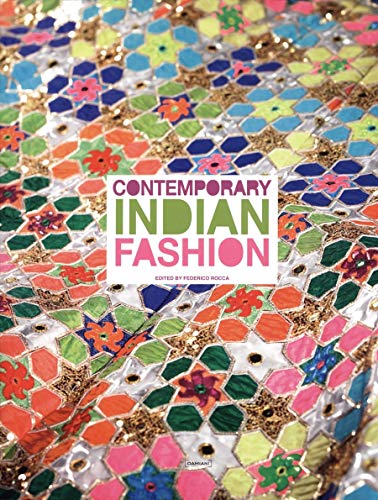 Contemporary Indian Fashion
by
Indian haute couture is conquering catwalks worldwide. For many, Indian fashion conjures multi-colored saris and gold embroidery, but the designers featured in this volume are turning that clich on its head by creating global styles without losing sight of tradition. This book documents the scene, with an in-depth look at designers as diverse as Fightercock (a collaboration between Abhishek Gupta and Nandita Basu, who claim on one of their t-shirts that "The Revolution must wear Fightercock"), AtpuG varuaG (who won Breakthrough Designer of the Year at the MTV and Zoom Style Awards in 2006) and Kavita Bharthia (who is known for both Indian and Western styles, impeccably finished on handlooms, which incorporate cottons and silks, scarves, stoles and knits). Other featured designers include Gayatri Khanna, Anamika Khanna, Small Shop, Anuj Sharma, Ashish N Soni, Ayesha Depala, CUE, Deepika Govind, Drashta Sarvaiya, Falguni & Shane Peacock, Manish Arora, Nachiket Barve, Namrata Joshipura, Nimita Rathod, Nitin Bal Chauhan, Prashant Verma, Rajesh Pratap Singh, Ranna Gill, My Village, Sabyasachi Mukherjee, Savio Jon, Shantanu & Nikhil, Shantanu Goenka, Swapnil Shinde, Varun Bahl, Wendell Rodricks and Bounipun. Contemporary Indian Fashion offers a host of experimental techniques for textiles, pattern cutting and sculptural draping, as well as the mixing of natural and synthetic fibers and unlikely juxtapositions such as jersey or chiffon with leather.
Contemporary Indian Fashion
by
Indian haute couture is conquering catwalks worldwide. For many, Indian fashion conjures multi-colored saris and gold embroidery, but the designers featured in this volume are turning that clich on its head by creating global styles without losing sight of tradition. This book documents the scene, with an in-depth look at designers as diverse as Fightercock (a collaboration between Abhishek Gupta and Nandita Basu, who claim on one of their t-shirts that "The Revolution must wear Fightercock"), AtpuG varuaG (who won Breakthrough Designer of the Year at the MTV and Zoom Style Awards in 2006) and Kavita Bharthia (who is known for both Indian and Western styles, impeccably finished on handlooms, which incorporate cottons and silks, scarves, stoles and knits). Other featured designers include Gayatri Khanna, Anamika Khanna, Small Shop, Anuj Sharma, Ashish N Soni, Ayesha Depala, CUE, Deepika Govind, Drashta Sarvaiya, Falguni & Shane Peacock, Manish Arora, Nachiket Barve, Namrata Joshipura, Nimita Rathod, Nitin Bal Chauhan, Prashant Verma, Rajesh Pratap Singh, Ranna Gill, My Village, Sabyasachi Mukherjee, Savio Jon, Shantanu & Nikhil, Shantanu Goenka, Swapnil Shinde, Varun Bahl, Wendell Rodricks and Bounipun. Contemporary Indian Fashion offers a host of experimental techniques for textiles, pattern cutting and sculptural draping, as well as the mixing of natural and synthetic fibers and unlikely juxtapositions such as jersey or chiffon with leather.
 The Fabric of India
by
Focusing on individual objects, it explores in great detail the materials and techniques used in their manufacture and discusses centres of production, patronage, markets and designs. It is the first truly comprehensive book on the subject, featuring lavishly illustrated chapters interspersed with detailed analysis of unique objects of world importance, including a Kashmir map shawl, Tipu Sultan's tent, and a remarkable eighteenth-century temple hanging from South India.
The Fabric of India
by
Focusing on individual objects, it explores in great detail the materials and techniques used in their manufacture and discusses centres of production, patronage, markets and designs. It is the first truly comprehensive book on the subject, featuring lavishly illustrated chapters interspersed with detailed analysis of unique objects of world importance, including a Kashmir map shawl, Tipu Sultan's tent, and a remarkable eighteenth-century temple hanging from South India.
 Kantha
by
The part of Bengal where the Ganges River flows into the Bay of Bengal has historically been the source of the finest cotton ever produced. The kind of embroidery known as kantha is created from this material, for daily use in many different contexts and in many different sizes. It deploys a simple running stitch in quilting layers of used cloth; details are embroidered using satin and stem stitches with thread taken from the colored borders of cast-off saris and dhotis. The workmanship varies from the crude to the complex and refined, but they are all made for daily use for various household purposes. The tribal culture of this region and its sense of continuity were evident until the early part of the 20th century, but the true unraveling of the kantha tradition came with partition, followed by the devastation brought on by the mass exodus of Hindu and Muslim populations in Pakistan, East Pakistan and India. Now, with global warming, the rising waters are resulting in the disappearance of villages, along with the livelihoods of the inhabitants. Reproducing bed covers, wrapping cloths for books and other valuables, floor covers and mats for ceremonial purposes from the late 19th to early 20th centuries, this collection captures and showcases the kantha tradition at a precarious time of change and struggle.
Kantha
by
The part of Bengal where the Ganges River flows into the Bay of Bengal has historically been the source of the finest cotton ever produced. The kind of embroidery known as kantha is created from this material, for daily use in many different contexts and in many different sizes. It deploys a simple running stitch in quilting layers of used cloth; details are embroidered using satin and stem stitches with thread taken from the colored borders of cast-off saris and dhotis. The workmanship varies from the crude to the complex and refined, but they are all made for daily use for various household purposes. The tribal culture of this region and its sense of continuity were evident until the early part of the 20th century, but the true unraveling of the kantha tradition came with partition, followed by the devastation brought on by the mass exodus of Hindu and Muslim populations in Pakistan, East Pakistan and India. Now, with global warming, the rising waters are resulting in the disappearance of villages, along with the livelihoods of the inhabitants. Reproducing bed covers, wrapping cloths for books and other valuables, floor covers and mats for ceremonial purposes from the late 19th to early 20th centuries, this collection captures and showcases the kantha tradition at a precarious time of change and struggle.
 Try Saying You're Alive!: Kazuki Tomokawa in His Own Words
by
"Tokyo in the 1970s was a magnet for young musicians, poets and painters. Among them was Kazuki Tomokawa, a prolific singer-songwriter from Japan's northern provinces, whose guttural vocals and incisive lyrics earned him the unofficial title of 'screaming philosopher.' The stories in this memoir---originally published in 2015 in Japan and now appearing as the first English translation of Tomokawa's writing---are told with a rambler's wit and wisdom, bringing together his memorable reflections on six decades of day labor, drinking, gambling, acting, singing and writing. Figures such as Kan Mikami, Nobuyoshi Araki and Shūji Terayama drift through this down-and-out vagabond's memoir, which observes the turbulence of postwar countercultures and the explosion of Tokyo's underground film and music scenes."--Book jacket.
Try Saying You're Alive!: Kazuki Tomokawa in His Own Words
by
"Tokyo in the 1970s was a magnet for young musicians, poets and painters. Among them was Kazuki Tomokawa, a prolific singer-songwriter from Japan's northern provinces, whose guttural vocals and incisive lyrics earned him the unofficial title of 'screaming philosopher.' The stories in this memoir---originally published in 2015 in Japan and now appearing as the first English translation of Tomokawa's writing---are told with a rambler's wit and wisdom, bringing together his memorable reflections on six decades of day labor, drinking, gambling, acting, singing and writing. Figures such as Kan Mikami, Nobuyoshi Araki and Shūji Terayama drift through this down-and-out vagabond's memoir, which observes the turbulence of postwar countercultures and the explosion of Tokyo's underground film and music scenes."--Book jacket.
 Siren Song
by
Fawzia Afzal-Khan's book is an important and timely feminist intervention in the study of classical music and a cogent challenge to the prevailing antisecular orthodoxy in the academy. In this complex and sensitive study...of the careers of artistes like Malka Pukhraj, Roshanara Begum, Reshma, and of the newer music and musical space offered by Coke Studio, Afzal-Khan shows us the multiple ways in which women performers negotiated and continue to negotiate their way through the numerous challenges thrown their way in the wake of the partitioning of the subcontinent and the multiple demands placed on them.
Siren Song
by
Fawzia Afzal-Khan's book is an important and timely feminist intervention in the study of classical music and a cogent challenge to the prevailing antisecular orthodoxy in the academy. In this complex and sensitive study...of the careers of artistes like Malka Pukhraj, Roshanara Begum, Reshma, and of the newer music and musical space offered by Coke Studio, Afzal-Khan shows us the multiple ways in which women performers negotiated and continue to negotiate their way through the numerous challenges thrown their way in the wake of the partitioning of the subcontinent and the multiple demands placed on them.
 Drumming Asian America
by
With its dynamic choreographies and booming drumbeats, taiko has gained worldwide popularity since its emergence in 1950s Japan. Harnessed by Japanese Americans in the late 1960s, taiko's sonic largesse and buoyant energy challenged stereotypical images of Asians in America as either modelminorities or sinister foreigners. While the majority of North American taiko players are Asian American, over 400 groups now exist across the US and Canada, and players come from a range of backgrounds. Using ethnographic and historical approaches, combined with in-depth performance description andanalysis, this book explores the connections between taiko and Asian American cultural politics.Based on original and archival interviews, as well as the author's extensive experience as a taiko player, this book highlights the Midwest as a site for Asian American cultural production and makes embodied experience central to inquiries about identity, including race, gender, and sexuality. Thebook builds on insights from the fields of dance studies, ethnomusicology, performance studies, queer and feminist theory, and Asian American studies to argue that taiko players from a variety of identity positions perform Asian America on stage, as well as in rehearsals, festivals, schools, andthrough interactions with audiences. While many taiko players play simply for the love of its dynamism and physicality, this book demonstrates that politics are built into even the most mundane aspects of rehearsing and performing.
Drumming Asian America
by
With its dynamic choreographies and booming drumbeats, taiko has gained worldwide popularity since its emergence in 1950s Japan. Harnessed by Japanese Americans in the late 1960s, taiko's sonic largesse and buoyant energy challenged stereotypical images of Asians in America as either modelminorities or sinister foreigners. While the majority of North American taiko players are Asian American, over 400 groups now exist across the US and Canada, and players come from a range of backgrounds. Using ethnographic and historical approaches, combined with in-depth performance description andanalysis, this book explores the connections between taiko and Asian American cultural politics.Based on original and archival interviews, as well as the author's extensive experience as a taiko player, this book highlights the Midwest as a site for Asian American cultural production and makes embodied experience central to inquiries about identity, including race, gender, and sexuality. Thebook builds on insights from the fields of dance studies, ethnomusicology, performance studies, queer and feminist theory, and Asian American studies to argue that taiko players from a variety of identity positions perform Asian America on stage, as well as in rehearsals, festivals, schools, andthrough interactions with audiences. While many taiko players play simply for the love of its dynamism and physicality, this book demonstrates that politics are built into even the most mundane aspects of rehearsing and performing.
 Musicophilia in Mumbai
by
In Musicophilia in Mumbai Tejaswini Niranjana traces the place of Hindustani classical music in Mumbai throughout the long twentieth century as the city moved from being a seat of British colonial power to a vibrant postcolonial metropolis. Drawing on historical archives, newspapers, oral histories, and interviews with musicians, critics, students, and instrument makers as well as her own personal experiences as a student of Hindustani classical music, Niranjana shows how the widespread love of music throughout the city created a culture of collective listening that brought together people of diverse social and linguistic backgrounds. This culture produced modern subjects Niranjana calls musicophiliacs, whose subjectivity was grounded in a social rather than an individualistic context. By attending concerts, learning instruments, and performing at home and in various urban environments, musicophiliacs embodied forms of modernity that were distinct from those found in the West. In tracing the relationship between musical practices and the formation of the social subject, Niranjana opens up new ways to think about urbanity, subjectivity, culture, and multiple modernities.
Musicophilia in Mumbai
by
In Musicophilia in Mumbai Tejaswini Niranjana traces the place of Hindustani classical music in Mumbai throughout the long twentieth century as the city moved from being a seat of British colonial power to a vibrant postcolonial metropolis. Drawing on historical archives, newspapers, oral histories, and interviews with musicians, critics, students, and instrument makers as well as her own personal experiences as a student of Hindustani classical music, Niranjana shows how the widespread love of music throughout the city created a culture of collective listening that brought together people of diverse social and linguistic backgrounds. This culture produced modern subjects Niranjana calls musicophiliacs, whose subjectivity was grounded in a social rather than an individualistic context. By attending concerts, learning instruments, and performing at home and in various urban environments, musicophiliacs embodied forms of modernity that were distinct from those found in the West. In tracing the relationship between musical practices and the formation of the social subject, Niranjana opens up new ways to think about urbanity, subjectivity, culture, and multiple modernities.
 Japanoise
by
Noise, an underground music made through an amalgam of feedback, distortion, and electronic effects, first emerged as a genre in the 1980s, circulating on cassette tapes traded between fans in Japan, Europe, and North America.
Japanoise
by
Noise, an underground music made through an amalgam of feedback, distortion, and electronic effects, first emerged as a genre in the 1980s, circulating on cassette tapes traded between fans in Japan, Europe, and North America.
 Absolutely on Music
by
A deeply personal, intimate conversation about music and writing between the internationally acclaimed, best-selling author and the former conductor of the Boston Symphony Orchestra. In Absolutely on Music, internationally Haruki Murakami sits down with his friend Seiji Ozawa, the revered former conductor of the Boston Symphony Orchestra, for a series of conversations on their shared passion: music. Over the course of two years, Murakami and Ozawa discuss everything from Brahms to Beethoven, from Leonard Bernstein to Glenn Gould, from Bartók to Mahler, and from pop-up orchestras to opera. They listen to and dissect recordings of some of their favorite performances, and Murakami questions Ozawa about his career conducting orchestras around the world. Culminating in Murakami's ten-day visit to the banks of Lake Geneva to observe Ozawa's retreat for young musicians, the book is interspersed with ruminations on record collecting, jazz clubs, orchestra halls, film scores, and much more. A deep reflection on the essential nature of both music and writing, Absolutely on Music is an unprecedented glimpse into the minds of two maestros.
Absolutely on Music
by
A deeply personal, intimate conversation about music and writing between the internationally acclaimed, best-selling author and the former conductor of the Boston Symphony Orchestra. In Absolutely on Music, internationally Haruki Murakami sits down with his friend Seiji Ozawa, the revered former conductor of the Boston Symphony Orchestra, for a series of conversations on their shared passion: music. Over the course of two years, Murakami and Ozawa discuss everything from Brahms to Beethoven, from Leonard Bernstein to Glenn Gould, from Bartók to Mahler, and from pop-up orchestras to opera. They listen to and dissect recordings of some of their favorite performances, and Murakami questions Ozawa about his career conducting orchestras around the world. Culminating in Murakami's ten-day visit to the banks of Lake Geneva to observe Ozawa's retreat for young musicians, the book is interspersed with ruminations on record collecting, jazz clubs, orchestra halls, film scores, and much more. A deep reflection on the essential nature of both music and writing, Absolutely on Music is an unprecedented glimpse into the minds of two maestros.
 Resounding Afro Asia
by
Cultural hybridity is a celebrated hallmark of U.S. American music and identity. Yet hybrid music is all too often marked -and marketed - under a single racial label. Resounding Afro Asia examines music projects that counter this convention; these projects instead foreground racial mixture inplayers, audiences, and sound in the very face of the ghettoizing culture industry. Giving voice to four contemporary projects, author Tamara Roberts traces black/Asian engagements that reach across the United States and beyond: Funkadesi, Yoko Noge, Fred Ho and the Afro Asian Music Ensemble, andRed Baraat.
Resounding Afro Asia
by
Cultural hybridity is a celebrated hallmark of U.S. American music and identity. Yet hybrid music is all too often marked -and marketed - under a single racial label. Resounding Afro Asia examines music projects that counter this convention; these projects instead foreground racial mixture inplayers, audiences, and sound in the very face of the ghettoizing culture industry. Giving voice to four contemporary projects, author Tamara Roberts traces black/Asian engagements that reach across the United States and beyond: Funkadesi, Yoko Noge, Fred Ho and the Afro Asian Music Ensemble, andRed Baraat.
 Made in Japan : studies in popular music
by
Made in Japan serves as a comprehensive and rigorous introduction to the history, sociology, and musicology ofnbsp;contemporarynbsp;Japanese popular music. Each essay, written by a leading scholar of Japanese music, covers the major figures, styles, and social contexts of pop music in Japan and provides adequate context so readers understand why the figure or genre under discussion is of lasting significance. The book first presents a general description of the history and background of popular music, followed by essays organized into thematic sections: Putting Japanese Popular Music in Perspective; Rockin' Japan; and Japanese Popular Music and Visual Arts.
Made in Japan : studies in popular music
by
Made in Japan serves as a comprehensive and rigorous introduction to the history, sociology, and musicology ofnbsp;contemporarynbsp;Japanese popular music. Each essay, written by a leading scholar of Japanese music, covers the major figures, styles, and social contexts of pop music in Japan and provides adequate context so readers understand why the figure or genre under discussion is of lasting significance. The book first presents a general description of the history and background of popular music, followed by essays organized into thematic sections: Putting Japanese Popular Music in Perspective; Rockin' Japan; and Japanese Popular Music and Visual Arts.
 Voice in the Drum
by
Based on extensive research in India and Pakistan, this new study examines the ways drumming and voices interconnect over vast areas of South Asia and considers what it means for instruments to be voice-like and carry textual messages in particular contexts. Richard K. Wolf employs a hybrid, novelistic form of presentation in which the fictional protagonist Muharram Ali, a man obsessed with finding music he believes will dissolve religious and political barriers, interacts with Wolf's field consultants, to communicate ethnographic and historical realities that transcend the local details of any one person's life. The result is a daring narrative that follows Muharram Ali on a journey that explores how the themes of South Asian Muslims and their neighbors coming together, moving apart, and relating to God and spiritual intermediaries resonate across ritual and expressive forms such as drumming and dancing.
Voice in the Drum
by
Based on extensive research in India and Pakistan, this new study examines the ways drumming and voices interconnect over vast areas of South Asia and considers what it means for instruments to be voice-like and carry textual messages in particular contexts. Richard K. Wolf employs a hybrid, novelistic form of presentation in which the fictional protagonist Muharram Ali, a man obsessed with finding music he believes will dissolve religious and political barriers, interacts with Wolf's field consultants, to communicate ethnographic and historical realities that transcend the local details of any one person's life. The result is a daring narrative that follows Muharram Ali on a journey that explores how the themes of South Asian Muslims and their neighbors coming together, moving apart, and relating to God and spiritual intermediaries resonate across ritual and expressive forms such as drumming and dancing.
 Tropical Renditions
by
In Tropical Renditions Christine Bacareza Balance examines how the performance and reception of post-World War II Filipino and Filipino American popular music provide crucial tools for composing Filipino identities, publics, and politics. To understand this dynamic, Balance advocates for a "disobedient listening" that reveals how Filipino musicians challenge dominant racialized U.S. imperialist tropes of Filipinos as primitive, childlike, derivative, and mimetic. Balance disobediently listens to how the Bay Area turntablist DJ group the Invisibl Skratch Piklz bear the burden of racialized performers in the United States and defy conventions on musical ownership; to karaoke as affective labor, aesthetic expression, and pedagogical instrument; to how writer and performer Jessica Hagedorn's collaborative and improvisational authorial voice signals the importance of migration and place; and how Pinoy indie rock scenes challenge the relationship between race and musical genre by tracing the alternative routes that popular music takes. In each instance Filipino musicians, writers, visual artists, and filmmakers work within and against the legacies of the U.S./Philippine imperial encounter, and in so doing, move beyond preoccupations with authenticity and offer new ways to reimagine tropical places.
Tropical Renditions
by
In Tropical Renditions Christine Bacareza Balance examines how the performance and reception of post-World War II Filipino and Filipino American popular music provide crucial tools for composing Filipino identities, publics, and politics. To understand this dynamic, Balance advocates for a "disobedient listening" that reveals how Filipino musicians challenge dominant racialized U.S. imperialist tropes of Filipinos as primitive, childlike, derivative, and mimetic. Balance disobediently listens to how the Bay Area turntablist DJ group the Invisibl Skratch Piklz bear the burden of racialized performers in the United States and defy conventions on musical ownership; to karaoke as affective labor, aesthetic expression, and pedagogical instrument; to how writer and performer Jessica Hagedorn's collaborative and improvisational authorial voice signals the importance of migration and place; and how Pinoy indie rock scenes challenge the relationship between race and musical genre by tracing the alternative routes that popular music takes. In each instance Filipino musicians, writers, visual artists, and filmmakers work within and against the legacies of the U.S./Philippine imperial encounter, and in so doing, move beyond preoccupations with authenticity and offer new ways to reimagine tropical places.
 Making It up Together
by
Most studies of musical improvisation focus on individual musicians. But that is not the whole story. From jazz to flamenco, Shona mbira to Javanese gamelan, improvised practices thrive on group creativity, relying on the close interaction of multiple simultaneously improvising performers. In Making It Up Together, Leslie A. Tilley explores the practice of collective musical improvisation cross-culturally, making a case for placing collectivity at the center of improvisation discourse and advocating ethnographically informed music analysis as a powerful tool for investigating improvisational processes.
Making It up Together
by
Most studies of musical improvisation focus on individual musicians. But that is not the whole story. From jazz to flamenco, Shona mbira to Javanese gamelan, improvised practices thrive on group creativity, relying on the close interaction of multiple simultaneously improvising performers. In Making It Up Together, Leslie A. Tilley explores the practice of collective musical improvisation cross-culturally, making a case for placing collectivity at the center of improvisation discourse and advocating ethnographically informed music analysis as a powerful tool for investigating improvisational processes.
 The Moe Manifesto
by
Moe is a huge cultural phenomenon and one of the driving forces behind the enormous success of Japanese anime and manga--not just in Japan but now throughout the world. In Japan, avid fans of manga comics, anime films and video games use the term Moe to refer to the strong sense of emotional attachment they feel for their favorite characters. These fans have a powerful desire to protect and nurture the youthful, beautiful and innocent characters they adore--like Sagisawa Moe in Dinosaur Planet and Tomoe Hotaru in Sailor Moon. They create their own websites, characters, stories, discussion groups, toys and games based on the original manga and anime roles. Author Patrick Galbraith is the world's acknowledged expert on Moe and a journalist based in Tokyo. For this book, he interviewed twenty important figures in the world of Japanese manga and anime to gain their insights on the Moe phenomenon. These interviews provide us with the first in-depth survey of this subject. Galbraith uncovers how Moe is influencing an entire generation of manga artists and readers. For those new to anime, manga, and youth culture in Japan, he discusses what constitutes the ideal Moe relationship and why some fans are even determined to marry their fictional sweethearts. He reveals key moments in the development of Moe, and current and future trends in the spread of Moe works and characters from Japan to other parts of the world. The Moe Manifesto provides an insider's look at the earliest Moe characters such as Ayame by Tezuka Osamu. The book has over 100 illustrations of the most famous Moe characters, many in color, and it is sure to delight manga and anime fans of every age.
The Moe Manifesto
by
Moe is a huge cultural phenomenon and one of the driving forces behind the enormous success of Japanese anime and manga--not just in Japan but now throughout the world. In Japan, avid fans of manga comics, anime films and video games use the term Moe to refer to the strong sense of emotional attachment they feel for their favorite characters. These fans have a powerful desire to protect and nurture the youthful, beautiful and innocent characters they adore--like Sagisawa Moe in Dinosaur Planet and Tomoe Hotaru in Sailor Moon. They create their own websites, characters, stories, discussion groups, toys and games based on the original manga and anime roles. Author Patrick Galbraith is the world's acknowledged expert on Moe and a journalist based in Tokyo. For this book, he interviewed twenty important figures in the world of Japanese manga and anime to gain their insights on the Moe phenomenon. These interviews provide us with the first in-depth survey of this subject. Galbraith uncovers how Moe is influencing an entire generation of manga artists and readers. For those new to anime, manga, and youth culture in Japan, he discusses what constitutes the ideal Moe relationship and why some fans are even determined to marry their fictional sweethearts. He reveals key moments in the development of Moe, and current and future trends in the spread of Moe works and characters from Japan to other parts of the world. The Moe Manifesto provides an insider's look at the earliest Moe characters such as Ayame by Tezuka Osamu. The book has over 100 illustrations of the most famous Moe characters, many in color, and it is sure to delight manga and anime fans of every age.
 The Changing Face of Korean Cinema
by
The rapid development of Korean cinema during the decades of the 1960s and 2000s reveals a dynamic cinematic history which runs parallel to the nation's political, social, economic and cultural transformation during these formative periods. This book examines the ways in which South Korean cinema has undergone a transformation from an antiquated local industry in the 1960s into a thriving international cinema in the 21st century.
The Changing Face of Korean Cinema
by
The rapid development of Korean cinema during the decades of the 1960s and 2000s reveals a dynamic cinematic history which runs parallel to the nation's political, social, economic and cultural transformation during these formative periods. This book examines the ways in which South Korean cinema has undergone a transformation from an antiquated local industry in the 1960s into a thriving international cinema in the 21st century.
 Historical Dictionary of Japanese Cinema
by
Japanese cinema's long history of production has seen films made in a variety of genres, including melodramas, romances, gangster movies, samurai movies, musicals, horror films, and monster films. It has also produced famous names such as: Akira Kurosawa, Hayao Miyazaki, Beat Takeshi, Toshirô Mifune, Godzilla, The Ring, Akira, Rashomon, and Seven Samurai. This dictionary is an overview of the long history of Japanese cinema with entries covering key films, genres, studios, directors, performers, and other individuals.
Historical Dictionary of Japanese Cinema
by
Japanese cinema's long history of production has seen films made in a variety of genres, including melodramas, romances, gangster movies, samurai movies, musicals, horror films, and monster films. It has also produced famous names such as: Akira Kurosawa, Hayao Miyazaki, Beat Takeshi, Toshirô Mifune, Godzilla, The Ring, Akira, Rashomon, and Seven Samurai. This dictionary is an overview of the long history of Japanese cinema with entries covering key films, genres, studios, directors, performers, and other individuals.
 Miyazakiworld
by
The story of filmmaker Hayao Miyazaki's life and work, including his significant impact on Japan and the world--"an essential work in anime scholarship." (Angelica Frey, Hyperallergic) A thirtieth???century toxic jungle, a bathhouse for tired gods, a red???haired fish girl, and a furry woodland spirit--what do these have in common? They all spring from the mind of Hayao Miyazaki, one of the greatest living animators, known worldwide for films such as My Neighbor Totoro, Princess Mononoke, Spirited Away, Howl's Moving Castle, and The Wind Rises. Japanese culture and animation scholar Susan Napier explores the life and art of this extraordinary Japanese filmmaker to provide a definitive account of his oeuvre. Napier insightfully illuminates the multiple themes crisscrossing his work, from empowered women to environmental nightmares to utopian dreams, creating an unforgettable portrait of a man whose art challenged Hollywood dominance and ushered in a new chapter of global popular culture.
Miyazakiworld
by
The story of filmmaker Hayao Miyazaki's life and work, including his significant impact on Japan and the world--"an essential work in anime scholarship." (Angelica Frey, Hyperallergic) A thirtieth???century toxic jungle, a bathhouse for tired gods, a red???haired fish girl, and a furry woodland spirit--what do these have in common? They all spring from the mind of Hayao Miyazaki, one of the greatest living animators, known worldwide for films such as My Neighbor Totoro, Princess Mononoke, Spirited Away, Howl's Moving Castle, and The Wind Rises. Japanese culture and animation scholar Susan Napier explores the life and art of this extraordinary Japanese filmmaker to provide a definitive account of his oeuvre. Napier insightfully illuminates the multiple themes crisscrossing his work, from empowered women to environmental nightmares to utopian dreams, creating an unforgettable portrait of a man whose art challenged Hollywood dominance and ushered in a new chapter of global popular culture.
 The Films of Merchant Ivory
by
A revised edition which includes the most recent films of the cultural phenomenon known as Merchant Ivory: Howard's End, The Remains of the Day, Jefferson in Paris, Surviving Picasso and The Proprietor, as well as a discussion of their future projects.
The Films of Merchant Ivory
by
A revised edition which includes the most recent films of the cultural phenomenon known as Merchant Ivory: Howard's End, The Remains of the Day, Jefferson in Paris, Surviving Picasso and The Proprietor, as well as a discussion of their future projects.
 Dialectics Without Synthesis
by
"Dialectics without Synthesis explores Japan's active but previously unrecognized participation in the global circulation of film theory during the first half of the twentieth century. Examining a variety of Japanese theorists working in the fields of film, literature, avant-garde art, Marxism, and philosophy, Naoki Yamamoto offers a new approach to cinematic realism as culturally conditioned articulations of the shifting relationship of film to the experience of modernity. In this study, long-held oppositions between realism and modernism, universalism and particularism, and most notably, the West and the non-West are challenged through a radical reconfiguration of the geopolitics of knowledge production and consumption"-- Provided by publisher.
Dialectics Without Synthesis
by
"Dialectics without Synthesis explores Japan's active but previously unrecognized participation in the global circulation of film theory during the first half of the twentieth century. Examining a variety of Japanese theorists working in the fields of film, literature, avant-garde art, Marxism, and philosophy, Naoki Yamamoto offers a new approach to cinematic realism as culturally conditioned articulations of the shifting relationship of film to the experience of modernity. In this study, long-held oppositions between realism and modernism, universalism and particularism, and most notably, the West and the non-West are challenged through a radical reconfiguration of the geopolitics of knowledge production and consumption"-- Provided by publisher.
 Lee Chang-Dong
by
This is the first full monograph on the widely acclaimed multi-award-winning South Korean director Lee Chang-Dong (b. 1954), whose 2018 film Burning was the first Korean production shortlisted for the Academy Award for Best Foreign Film.With his six features made since taking up film-making at the age of 43 (after working as a novelist), Lee has distinguished himself as an uncompromising auteur through his tightly wrought narratives that depict human suffering taken to its limits.His films tend to follow conventional genre structures, including thriller and melodrama, but are consistently surprising in both their emotional subtlety and their characters' confrontations with Korean history and politics.The latest in Dis Voir's monograph series, the book was designed by Lee himself, who selected and arranged all the images, and includes an interview with the Director along with several scholarly essays on his work.Other books in the film directors series include Wong Kar-Wai, Tsai Ming Liang, Kim Ki-Duk and Atom Egoyan.
Lee Chang-Dong
by
This is the first full monograph on the widely acclaimed multi-award-winning South Korean director Lee Chang-Dong (b. 1954), whose 2018 film Burning was the first Korean production shortlisted for the Academy Award for Best Foreign Film.With his six features made since taking up film-making at the age of 43 (after working as a novelist), Lee has distinguished himself as an uncompromising auteur through his tightly wrought narratives that depict human suffering taken to its limits.His films tend to follow conventional genre structures, including thriller and melodrama, but are consistently surprising in both their emotional subtlety and their characters' confrontations with Korean history and politics.The latest in Dis Voir's monograph series, the book was designed by Lee himself, who selected and arranged all the images, and includes an interview with the Director along with several scholarly essays on his work.Other books in the film directors series include Wong Kar-Wai, Tsai Ming Liang, Kim Ki-Duk and Atom Egoyan.
 A Dream of Resistance
by
Celebrated as one of Japan's greatest filmmakers, Kobayashi Masaki's scorching depictions of war and militarism marked him as a uniquely defiant voice in post-war Japanese cinema. A pacifist drafted into Japan's Imperial Army, Kobayashi survived the war with his principles intact and created a body of work that was uncompromising in its critique of the nation's military heritage. Yet his renowned political critiques were grounded in spiritual perspectives, integrating motifs and beliefs from both Buddhism and Christianity. A Dream of Resistance is the first book in English to explore Kobayashi's entire career, from the early films he made at Shochiku studio, to internationally-acclaimed masterpieces like The Human Condition, Harakiri, and Samurai Rebellion, and on to his final work for NHK Television. Closely examining how Kobayashi's upbringing and intellectual history shaped the values of his work, Stephen Prince illuminates the political and religious dimensions of Kobayashi's films, interpreting them as a prayer for peace in troubled times. Prince draws from a wealth of rare archives, including previously untranslated interviews, material that Kobayashi wrote about his films, and even the young director's wartime diary. The result is an unprecedented portrait of this singular filmmaker.
A Dream of Resistance
by
Celebrated as one of Japan's greatest filmmakers, Kobayashi Masaki's scorching depictions of war and militarism marked him as a uniquely defiant voice in post-war Japanese cinema. A pacifist drafted into Japan's Imperial Army, Kobayashi survived the war with his principles intact and created a body of work that was uncompromising in its critique of the nation's military heritage. Yet his renowned political critiques were grounded in spiritual perspectives, integrating motifs and beliefs from both Buddhism and Christianity. A Dream of Resistance is the first book in English to explore Kobayashi's entire career, from the early films he made at Shochiku studio, to internationally-acclaimed masterpieces like The Human Condition, Harakiri, and Samurai Rebellion, and on to his final work for NHK Television. Closely examining how Kobayashi's upbringing and intellectual history shaped the values of his work, Stephen Prince illuminates the political and religious dimensions of Kobayashi's films, interpreting them as a prayer for peace in troubled times. Prince draws from a wealth of rare archives, including previously untranslated interviews, material that Kobayashi wrote about his films, and even the young director's wartime diary. The result is an unprecedented portrait of this singular filmmaker.
 Ishiro Honda
by
"Examines the life and career of Japanese director Ishiro Honda, including analysis of his films"-- Provided by publisher.
Ishiro Honda
by
"Examines the life and career of Japanese director Ishiro Honda, including analysis of his films"-- Provided by publisher.
 The Anime Encyclopedia, 3rd Revised Edition
by
"Over 1,000 new entries, over 4,000 updates and corrections, countless old arguments ended (and new ones begun). This 3rd edition of The Anime Encyclopedia brings the landmark reference work up to date with six additional years of information on Japanese animation, its practitioners and products, as well as incisive thematic entries on anime history and culture"-- Provided by publisher.
The Anime Encyclopedia, 3rd Revised Edition
by
"Over 1,000 new entries, over 4,000 updates and corrections, countless old arguments ended (and new ones begun). This 3rd edition of The Anime Encyclopedia brings the landmark reference work up to date with six additional years of information on Japanese animation, its practitioners and products, as well as incisive thematic entries on anime history and culture"-- Provided by publisher.
 The Encyclopedia of Japanese Horror Films
by
The Encyclopedia of Japanese Horror Films covers virtually every horror film made in Japan from the past century to date. In addition to entries on productions, both major and modest, this encyclopedia also includes entries for notable directors, producers, and actors. Each film entry includes comprehensive details, situates the film in the context and history of Japanese horror cinema, and includes brief suggestions for further reading. Although emphasizing horror as a general theme, this encyclopedia also encompasses other genres that are associated with this theme, including Comedy Horror. -- Publisher.
The Encyclopedia of Japanese Horror Films
by
The Encyclopedia of Japanese Horror Films covers virtually every horror film made in Japan from the past century to date. In addition to entries on productions, both major and modest, this encyclopedia also includes entries for notable directors, producers, and actors. Each film entry includes comprehensive details, situates the film in the context and history of Japanese horror cinema, and includes brief suggestions for further reading. Although emphasizing horror as a general theme, this encyclopedia also encompasses other genres that are associated with this theme, including Comedy Horror. -- Publisher.
 Interpreting Anime
by
For students, fans, and scholars alike, this wide-ranging primer on anime employs a panoply of critical approaches Well-known through hit movies like Spirited Away, Akira, and Ghost in the Shell, anime has a long history spanning a wide range of directors, genres, and styles. Christopher Bolton's Interpreting Anime is a thoughtful, carefully organized introduction to Japanese animation for anyone eager to see why this genre has remained a vital, adaptable art form for decades. Interpreting Anime is easily accessible and structured around individual films and a broad array of critical approaches. Each chapter centers on a different feature-length anime film, juxtaposing it with a particular medium--like literary fiction, classical Japanese theater, and contemporary stage drama--to reveal what is unique about anime's way of representing the world. This analysis is abetted by a suite of questions provoked by each film, along with Bolton's incisive responses. Throughout, Interpreting Anime applies multiple frames, such as queer theory, psychoanalysis, and theories of postmodernism, giving readers a thorough understanding of both the cultural underpinnings and critical significance of each film. What emerges from the sweep of Interpreting Anime is Bolton's original, articulate case for what makes anime unique as a medium: how it at once engages profound social and political realities while also drawing attention to the very challenges of representing reality in animation's imaginative and compelling visual forms.
Interpreting Anime
by
For students, fans, and scholars alike, this wide-ranging primer on anime employs a panoply of critical approaches Well-known through hit movies like Spirited Away, Akira, and Ghost in the Shell, anime has a long history spanning a wide range of directors, genres, and styles. Christopher Bolton's Interpreting Anime is a thoughtful, carefully organized introduction to Japanese animation for anyone eager to see why this genre has remained a vital, adaptable art form for decades. Interpreting Anime is easily accessible and structured around individual films and a broad array of critical approaches. Each chapter centers on a different feature-length anime film, juxtaposing it with a particular medium--like literary fiction, classical Japanese theater, and contemporary stage drama--to reveal what is unique about anime's way of representing the world. This analysis is abetted by a suite of questions provoked by each film, along with Bolton's incisive responses. Throughout, Interpreting Anime applies multiple frames, such as queer theory, psychoanalysis, and theories of postmodernism, giving readers a thorough understanding of both the cultural underpinnings and critical significance of each film. What emerges from the sweep of Interpreting Anime is Bolton's original, articulate case for what makes anime unique as a medium: how it at once engages profound social and political realities while also drawing attention to the very challenges of representing reality in animation's imaginative and compelling visual forms.
 Ghostly Desires
by
Through an examination of post-1997 Thai cinema and video art Arnika Fuhrmann shows how vernacular Buddhist tenets, stories, and images combine with sexual politics in figuring current struggles over notions of personhood, sexuality, and collective life. The drama, horror, heritage, and experimental art films she analyzes draw on Buddhist-informed conceptions of impermanence and prominently feature the motif of the female ghost. In these films the characters' eroticization in the spheres of loss and death represents an improvisation on the Buddhist disavowal of attachment and highlights under-recognized female and queer desire and persistence. Her feminist and queer readings reveal the entangled relationships between film, sexuality, Buddhist ideas, and the Thai state's regulation of heteronormative sexuality. Fuhrmann thereby provides insights into the configuration of contemporary Thailand while opening up new possibilities for thinking about queer personhood and femininity.
Ghostly Desires
by
Through an examination of post-1997 Thai cinema and video art Arnika Fuhrmann shows how vernacular Buddhist tenets, stories, and images combine with sexual politics in figuring current struggles over notions of personhood, sexuality, and collective life. The drama, horror, heritage, and experimental art films she analyzes draw on Buddhist-informed conceptions of impermanence and prominently feature the motif of the female ghost. In these films the characters' eroticization in the spheres of loss and death represents an improvisation on the Buddhist disavowal of attachment and highlights under-recognized female and queer desire and persistence. Her feminist and queer readings reveal the entangled relationships between film, sexuality, Buddhist ideas, and the Thai state's regulation of heteronormative sexuality. Fuhrmann thereby provides insights into the configuration of contemporary Thailand while opening up new possibilities for thinking about queer personhood and femininity.
 100 Essential Indian Films
by
Although the motion picture industry in India is one of the oldest and largest in the world--with literally thousands of productions released each year--films from that country have not been as well received as those from other countries. Known for their impressive musical numbers, melodramatic plots, and nationally beloved stars, Indian films have long been ignored by the West but are now at the forefront of cinema studies. With the prolific number of films available, it can be difficult to know what to watch. In 100 Essential Indian Films, Rohit K. Dasgupta and Sangeeta Datta identify and discuss significant works produced since the 1930s. Examining the output of different regional film industries throughout India, this volume offers a balance of box-office blockbusters, critical successes, and less-recognized cult classics. From early films by Satyajit Ray to contemporary classics such as Salaam Bombay and Lagaan, each entry includes comprehensive details about the film and situates the work in the context and history of the Indian canon. In addition to these notable productions, this book also examines key film directors and the work of major film stars in the industry. While many studies of Indian films focus on a single language's contributions, this encyclopedia offers a comprehensive guide to productions from across the country in various languages, including Hindi, Bengali, Tamil, Malayalam, Assamese, Punjabi, Marathi, and English. 100 Essential Indian Films is an engaging volume that will appeal to both cinema scholars and those looking for an introduction to a vital component of world cinema.
100 Essential Indian Films
by
Although the motion picture industry in India is one of the oldest and largest in the world--with literally thousands of productions released each year--films from that country have not been as well received as those from other countries. Known for their impressive musical numbers, melodramatic plots, and nationally beloved stars, Indian films have long been ignored by the West but are now at the forefront of cinema studies. With the prolific number of films available, it can be difficult to know what to watch. In 100 Essential Indian Films, Rohit K. Dasgupta and Sangeeta Datta identify and discuss significant works produced since the 1930s. Examining the output of different regional film industries throughout India, this volume offers a balance of box-office blockbusters, critical successes, and less-recognized cult classics. From early films by Satyajit Ray to contemporary classics such as Salaam Bombay and Lagaan, each entry includes comprehensive details about the film and situates the work in the context and history of the Indian canon. In addition to these notable productions, this book also examines key film directors and the work of major film stars in the industry. While many studies of Indian films focus on a single language's contributions, this encyclopedia offers a comprehensive guide to productions from across the country in various languages, including Hindi, Bengali, Tamil, Malayalam, Assamese, Punjabi, Marathi, and English. 100 Essential Indian Films is an engaging volume that will appeal to both cinema scholars and those looking for an introduction to a vital component of world cinema.
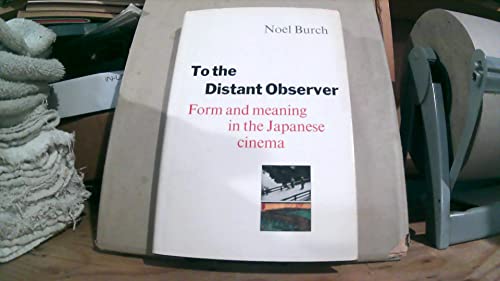 To the Distant Observer
by
The cinema of Japan, at least until I945, was the only national cinema to derive fundamentally from a non-European culture. Its films thus diverged in important respects from the standard 'Hollywood style' of shooting and editing adopted by the industries of Europe and the US, as well as by colonized nations. In this unprecedented study, Noel Burch confronts the major modes of discourse of Japanese culture with the stylistic development of Japanese cinema, and contrasts the resulting modes of representation with those of the West. Contrary to previous opinion, Burch shows how the period I 896-I 930 was not one of stagnation and 'underdevelopment' but instead constituted a preparatory stage for the I93o-I945 'golden age' of Japanese cinema, during which Ozu, Mizoguchi, and other less well-known masters produced their most distinguished films. Burch also concludes that prewar militarism was.relatively uninfluential on the work of the 'thirties and he views the post-1945 period of 'democratization' as one of regression in cinema, particularly in the works of Ozu and Mizoguchi. Treating many examples with the aid of frame enlargements, Burch illuminates previously unknown aspects of Japanese film history. And his dialectical analysis produces a new understanding of the elements of film structure.
To the Distant Observer
by
The cinema of Japan, at least until I945, was the only national cinema to derive fundamentally from a non-European culture. Its films thus diverged in important respects from the standard 'Hollywood style' of shooting and editing adopted by the industries of Europe and the US, as well as by colonized nations. In this unprecedented study, Noel Burch confronts the major modes of discourse of Japanese culture with the stylistic development of Japanese cinema, and contrasts the resulting modes of representation with those of the West. Contrary to previous opinion, Burch shows how the period I 896-I 930 was not one of stagnation and 'underdevelopment' but instead constituted a preparatory stage for the I93o-I945 'golden age' of Japanese cinema, during which Ozu, Mizoguchi, and other less well-known masters produced their most distinguished films. Burch also concludes that prewar militarism was.relatively uninfluential on the work of the 'thirties and he views the post-1945 period of 'democratization' as one of regression in cinema, particularly in the works of Ozu and Mizoguchi. Treating many examples with the aid of frame enlargements, Burch illuminates previously unknown aspects of Japanese film history. And his dialectical analysis produces a new understanding of the elements of film structure.
 A City of Sadness
by
Winner of the Golden Lion in Venice in 1989, A City of Sadness introduced Western audiences to the richness of New Taiwanese Cinema. Its director, Hou Hsiao-hsien is now recognised as one of the most profoundly original auteurs in contemporary cinema. A City of Sadness revisits a painful episode in recent Taiwanese history, creating an elliptical and impressionistic picture of Chiang Kai-shek's takeover of the island after the defeat of his Kuomintang army by Mao Zedong. Taiwan's politics and the suffering of her inhabitants are invoked by Hou in the story of an extended family of four brothers. The first Taiwanese film shot in direct sound, A City of Sadness echoes the forgotten voices of ordinary people facing political repression. Berenice Reynaud deciphers the complex social and historical threads that combine in the film while analysing its aesthetics in the context of Hou's entire career. His journey from being a commercial director to becoming the famed master of long takes and painterly compositions is referred to the history of Taiwanese cinema and the philosophy of forms in Chinese art.
A City of Sadness
by
Winner of the Golden Lion in Venice in 1989, A City of Sadness introduced Western audiences to the richness of New Taiwanese Cinema. Its director, Hou Hsiao-hsien is now recognised as one of the most profoundly original auteurs in contemporary cinema. A City of Sadness revisits a painful episode in recent Taiwanese history, creating an elliptical and impressionistic picture of Chiang Kai-shek's takeover of the island after the defeat of his Kuomintang army by Mao Zedong. Taiwan's politics and the suffering of her inhabitants are invoked by Hou in the story of an extended family of four brothers. The first Taiwanese film shot in direct sound, A City of Sadness echoes the forgotten voices of ordinary people facing political repression. Berenice Reynaud deciphers the complex social and historical threads that combine in the film while analysing its aesthetics in the context of Hou's entire career. His journey from being a commercial director to becoming the famed master of long takes and painterly compositions is referred to the history of Taiwanese cinema and the philosophy of forms in Chinese art.
 Butoh
by
Both a refraction of the bombings of Hiroshima and Nagasaki and a protest against Western values, butoh is a form of Japanese dance theater that emerged in the aftermath of World War II. Sondra Fraleigh chronicles the growth of this provocative art form from its mid-century founding under a sign of darkness to its assimilation in the twenty-first century as a poignant performance medium with philosophical and political implications. Through highly descriptive, thoughtful, and emotional prose, Fraleigh traces the transformative alchemy of this metaphoric dance form by studying the international movement inspired by its aesthetic mixtures. While butoh has retained a special identity related to its Japanese background, it also has blossomed into a borderless art with a tolerant and inclusive morphology gaining prominence in a borderless century. Employing intellectual and aesthetic perspectives to reveal the origins, major figures, and international development of the dance, Fraleigh documents the range and variety of butoh artists around the world with first-hand knowledge of butoh performances from 1973 to 2008. Her definitions of butoh's morphology, alchemy, and philosophy set a theoretical framework for poetic and engaging articulations of twenty butoh performances in Japan, Europe, India, and the West. With a blend of scholarly research and direct experience, she also signifies the unfinished nature of butoh and emphasizes its capacity to effect spiritual transformation and bridge cultural differences.
Butoh
by
Both a refraction of the bombings of Hiroshima and Nagasaki and a protest against Western values, butoh is a form of Japanese dance theater that emerged in the aftermath of World War II. Sondra Fraleigh chronicles the growth of this provocative art form from its mid-century founding under a sign of darkness to its assimilation in the twenty-first century as a poignant performance medium with philosophical and political implications. Through highly descriptive, thoughtful, and emotional prose, Fraleigh traces the transformative alchemy of this metaphoric dance form by studying the international movement inspired by its aesthetic mixtures. While butoh has retained a special identity related to its Japanese background, it also has blossomed into a borderless art with a tolerant and inclusive morphology gaining prominence in a borderless century. Employing intellectual and aesthetic perspectives to reveal the origins, major figures, and international development of the dance, Fraleigh documents the range and variety of butoh artists around the world with first-hand knowledge of butoh performances from 1973 to 2008. Her definitions of butoh's morphology, alchemy, and philosophy set a theoretical framework for poetic and engaging articulations of twenty butoh performances in Japan, Europe, India, and the West. With a blend of scholarly research and direct experience, she also signifies the unfinished nature of butoh and emphasizes its capacity to effect spiritual transformation and bridge cultural differences.
 Revolutionary Bodies
by
"Revolutionary Bodies is the first primary source-based history of concert dance in the People's Republic of China. Combining over a decade of ethnographic and archival research, it analyzes major dance works by Chinese choreographers staged over an eighty-year period from 1935 to 2015. Using previously unexamined film footage, photographic documentation, performance programs, and other historical and contemporary sources, Emily Wilcox challenges the commonly accepted view that Soviet-inspired revolutionary ballets are the primary legacy of the socialist era in China's dance field. The digital edition of this title includes nineteen embedded videos of selected dance works discussed by the author"--Provided by publisher.
Revolutionary Bodies
by
"Revolutionary Bodies is the first primary source-based history of concert dance in the People's Republic of China. Combining over a decade of ethnographic and archival research, it analyzes major dance works by Chinese choreographers staged over an eighty-year period from 1935 to 2015. Using previously unexamined film footage, photographic documentation, performance programs, and other historical and contemporary sources, Emily Wilcox challenges the commonly accepted view that Soviet-inspired revolutionary ballets are the primary legacy of the socialist era in China's dance field. The digital edition of this title includes nineteen embedded videos of selected dance works discussed by the author"--Provided by publisher.
 Indian Modern Dance, Feminism and Transnationalism
by
This book examines modern dance as a form of embodied resistance to political and cultural nationalism in India through the works of five selected modern dance makers: Rabindranath Tagore, Uday Shankar, Shanti Bardhan, Manjusri Chaki Sircar and Ranjabati Sircar.
Indian Modern Dance, Feminism and Transnationalism
by
This book examines modern dance as a form of embodied resistance to political and cultural nationalism in India through the works of five selected modern dance makers: Rabindranath Tagore, Uday Shankar, Shanti Bardhan, Manjusri Chaki Sircar and Ranjabati Sircar.
 Illicit Worlds of Indian Dance
by
Until the 1930s no woman could perform in public and retain respectability in India. Professional female performers were courtesans and dancing girls who lived beyond the confines of marriage, but were often powerful figures in social and cultural life. Women's roles were often also taken byboys and men, some of whom were simply female impersonators, others transgender. Since the late nineteenth century the status, livelihood and identity of these performers have all diminished, with the result that many of them have become involved in sexual transactions and sexualised performances.Meanwhile, upper-class, upper-caste women have taken control of the classical performing arts and also entered the film industry, while a Bollywood dance and fitness craze has recently swept middle class India. In her historical on-the-ground study, Anna Morcom investigates the emergence of illicitworlds of dance in the shadow of India's official performing arts. She explores over a century of marginalisation of courtesans, dancing girls, bar girls and transgender performers, and de- scribes their lives as they struggle with stigmatisation, derision and loss of livelihood.
Illicit Worlds of Indian Dance
by
Until the 1930s no woman could perform in public and retain respectability in India. Professional female performers were courtesans and dancing girls who lived beyond the confines of marriage, but were often powerful figures in social and cultural life. Women's roles were often also taken byboys and men, some of whom were simply female impersonators, others transgender. Since the late nineteenth century the status, livelihood and identity of these performers have all diminished, with the result that many of them have become involved in sexual transactions and sexualised performances.Meanwhile, upper-class, upper-caste women have taken control of the classical performing arts and also entered the film industry, while a Bollywood dance and fitness craze has recently swept middle class India. In her historical on-the-ground study, Anna Morcom investigates the emergence of illicitworlds of dance in the shadow of India's official performing arts. She explores over a century of marginalisation of courtesans, dancing girls, bar girls and transgender performers, and de- scribes their lives as they struggle with stigmatisation, derision and loss of livelihood.
 Choreographing in Color
by
In Choreographing in Color, J. Lorenzo Perillo investigates the development of Filipino popular dance and performance since the late 20th century. Drawing from nearly two decades of ethnography, choreographic analysis, and community engagement with artists, choreographers, and organizers,Perillo shifts attention away from the predominant Philippine neoliberal and U.S. imperialist emphasis on Filipinos as superb mimics, heroic migrants, model minorities, and natural dancers and instead asks: what does it mean for Filipinos to navigate the violent forces of empire and neoliberalismwith street dance and Hip-Hop?Employing critical race, feminist, and performance studies, Perillo analyzes the conditions of possibility that gave rise to Filipino dance phenomena across viral, migrant, theatrical, competitive, and diplomatic performance in the Philippines and diaspora. Advocating for serious engagements withthe dancing body, Perillo rethinks a staple of Hip-Hop's regulation, the "euphemism," as a mode of social critique for understanding how folks have engaged with both racial histories of colonialism and gendered labor migration. Figures of euphemism - the zombie, hero, robot, and judge - constitute away of seeing Filipino Hip-Hop as contiguous with a multi-racial repertoire of imperial crossing, thus uncovering the ways Black dance intersects Filipino racialization and reframing the ongoing, contested underdog relationship between Filipinos and U.S. global power. Choreographing in Colortherefore reveals how the Filipino dancing body has come to be, paradoxically, both globally recognized and indiscernible.
Choreographing in Color
by
In Choreographing in Color, J. Lorenzo Perillo investigates the development of Filipino popular dance and performance since the late 20th century. Drawing from nearly two decades of ethnography, choreographic analysis, and community engagement with artists, choreographers, and organizers,Perillo shifts attention away from the predominant Philippine neoliberal and U.S. imperialist emphasis on Filipinos as superb mimics, heroic migrants, model minorities, and natural dancers and instead asks: what does it mean for Filipinos to navigate the violent forces of empire and neoliberalismwith street dance and Hip-Hop?Employing critical race, feminist, and performance studies, Perillo analyzes the conditions of possibility that gave rise to Filipino dance phenomena across viral, migrant, theatrical, competitive, and diplomatic performance in the Philippines and diaspora. Advocating for serious engagements withthe dancing body, Perillo rethinks a staple of Hip-Hop's regulation, the "euphemism," as a mode of social critique for understanding how folks have engaged with both racial histories of colonialism and gendered labor migration. Figures of euphemism - the zombie, hero, robot, and judge - constitute away of seeing Filipino Hip-Hop as contiguous with a multi-racial repertoire of imperial crossing, thus uncovering the ways Black dance intersects Filipino racialization and reframing the ongoing, contested underdog relationship between Filipinos and U.S. global power. Choreographing in Colortherefore reveals how the Filipino dancing body has come to be, paradoxically, both globally recognized and indiscernible.
 Yoshitomo Nara
by
Follow the trajectory of Yoshitomo Nara, one of the most prominent contemporary artists, whose work has grown in complexity and nuance over the past three decades. Thirty years after Yoshitomo Nara rocketed to fame with his paintings of sinister figures, the artist has developed his practice to reflect his unique, empathic eye. This book presents the full range of Nara's work. Along with his most recognizable pieces, such as his ubiquitous portraits of wide-eyed figures on monochromatic backgrounds, readers will discover his earliest paintings, sketched on surfaces ranging from envelopes to cardboard made during his time in Germany, as well as an installation that re-creates his drawing studio. His most recent works are also represented, including his large-scale bronze and ceramic figurines and portraits made following the 2011 earthquake that devastated Japan. Comparing and contrasting these pieces through Nara's distinctive musical lens, the catalogue also features "liner notes" written by the artist about various albums in his personal collection, published in English for the first time. Viewers will see the evolution of a dynamic artist who has become more contemplative with age. Published with the Los Angeles County Museum of Art
Yoshitomo Nara
by
Follow the trajectory of Yoshitomo Nara, one of the most prominent contemporary artists, whose work has grown in complexity and nuance over the past three decades. Thirty years after Yoshitomo Nara rocketed to fame with his paintings of sinister figures, the artist has developed his practice to reflect his unique, empathic eye. This book presents the full range of Nara's work. Along with his most recognizable pieces, such as his ubiquitous portraits of wide-eyed figures on monochromatic backgrounds, readers will discover his earliest paintings, sketched on surfaces ranging from envelopes to cardboard made during his time in Germany, as well as an installation that re-creates his drawing studio. His most recent works are also represented, including his large-scale bronze and ceramic figurines and portraits made following the 2011 earthquake that devastated Japan. Comparing and contrasting these pieces through Nara's distinctive musical lens, the catalogue also features "liner notes" written by the artist about various albums in his personal collection, published in English for the first time. Viewers will see the evolution of a dynamic artist who has become more contemplative with age. Published with the Los Angeles County Museum of Art
 Tenzing Dakpa: the Hotel
by
The hotel in this book is both real and metaphorical, an actual establishment run by Tenzing Dakpa's parents in Sikkim, Northeast India, and a prism through which he revisits his family history and place within it. Dakpa's photos reveal the physical spaces of the hotel, its guest rooms, dining room, the family's cat on a flight of stairs; as well as signs of daily working life there: sheets hanging out to dry, clipping plants in the garden, his parents engaged in various tasks. For the hotel is both public and private, a business and a home: a transient place for guests who come and go and a residence that holds the memories of its owners and projects their hopes.As the only member of his family not involved in running the hotel, Dakpa's photos allow him to negotiate his migration and detachment from it, while intensely exploring his family relationships. In Dakpa's words, one's sense of self is inseparable from the places we create, both physically and in our minds: "The nature of our official identity and place on paper is adopted and the one which is in our memory is fragmented, revealed only in places we once remember." The Hotel is the winner of the Singapore International Photography Festival Photobook Award 2018.
Tenzing Dakpa: the Hotel
by
The hotel in this book is both real and metaphorical, an actual establishment run by Tenzing Dakpa's parents in Sikkim, Northeast India, and a prism through which he revisits his family history and place within it. Dakpa's photos reveal the physical spaces of the hotel, its guest rooms, dining room, the family's cat on a flight of stairs; as well as signs of daily working life there: sheets hanging out to dry, clipping plants in the garden, his parents engaged in various tasks. For the hotel is both public and private, a business and a home: a transient place for guests who come and go and a residence that holds the memories of its owners and projects their hopes.As the only member of his family not involved in running the hotel, Dakpa's photos allow him to negotiate his migration and detachment from it, while intensely exploring his family relationships. In Dakpa's words, one's sense of self is inseparable from the places we create, both physically and in our minds: "The nature of our official identity and place on paper is adopted and the one which is in our memory is fragmented, revealed only in places we once remember." The Hotel is the winner of the Singapore International Photography Festival Photobook Award 2018.
 Yayoi Kusama
by
"Yayoi Kusama. A Retrospective' features groundbreaking new research and archival documents, including photography and film materials. These focus on Kusama's early 1960s exhibitions in Germany and Europe, as well as covering a wide range of aspects of her oeuvre, which spans a period of over seventy years. New essays by eleven esteemed authors provide insights into Kusama's work from various points of view, with perspectives that have been previously neglected. As such, the artist's commitment to political and social issues in Europe, America, and Japan are illuminated. Exhibition: Gropius Bau, Berlin, Germany (postponed until March 2021)."-- Publisher's description
Yayoi Kusama
by
"Yayoi Kusama. A Retrospective' features groundbreaking new research and archival documents, including photography and film materials. These focus on Kusama's early 1960s exhibitions in Germany and Europe, as well as covering a wide range of aspects of her oeuvre, which spans a period of over seventy years. New essays by eleven esteemed authors provide insights into Kusama's work from various points of view, with perspectives that have been previously neglected. As such, the artist's commitment to political and social issues in Europe, America, and Japan are illuminated. Exhibition: Gropius Bau, Berlin, Germany (postponed until March 2021)."-- Publisher's description
 Mrinalini Mukherjee
by
This revelatory monograph explores the work of Indian sculptor Mrinalini Mukherjee (1949-2015). Committed to sculpture, Mukherjee worked most intensively with fiber, making significant forays into ceramic and bronze toward the middle and latter half of her career. Within her immediate artistic milieu in post-independent India, Mukherjee was one of the outlier artists whose art remained untethered to the dominant commitments of painting and figural storytelling. Her sculpture was sustained by a knowledge of traditional Indian and historic European sculpture, folk art, modern design, local crafts and textiles. Knotting was the principal gesture of Mukherjee's technique, evident from the very start of her practice. Working intuitively, she never resorted to a sketch, model or preparatory drawing. Probing the divide between figuration and abstraction, Mukherjee would fashion unusual, mysterious, sensual and, at times, unsettlingly grotesque forms, commanding in their presence and scale. In retrospect, Mukherjee's artistic output appears iconoclastic, singular, calling out for assessment and analysis across multiple registers, as well as for an account of why, in hindsight, it was relegated to the margins. Within these pages are deliberations on Mukherjee's place within both an Indian and a more international art history, and her work's relationship to other fiber-art practices from the mid to late 20th century. This book will introduce Mukherjee to a new generation of scholars, art historians and artists.
Mrinalini Mukherjee
by
This revelatory monograph explores the work of Indian sculptor Mrinalini Mukherjee (1949-2015). Committed to sculpture, Mukherjee worked most intensively with fiber, making significant forays into ceramic and bronze toward the middle and latter half of her career. Within her immediate artistic milieu in post-independent India, Mukherjee was one of the outlier artists whose art remained untethered to the dominant commitments of painting and figural storytelling. Her sculpture was sustained by a knowledge of traditional Indian and historic European sculpture, folk art, modern design, local crafts and textiles. Knotting was the principal gesture of Mukherjee's technique, evident from the very start of her practice. Working intuitively, she never resorted to a sketch, model or preparatory drawing. Probing the divide between figuration and abstraction, Mukherjee would fashion unusual, mysterious, sensual and, at times, unsettlingly grotesque forms, commanding in their presence and scale. In retrospect, Mukherjee's artistic output appears iconoclastic, singular, calling out for assessment and analysis across multiple registers, as well as for an account of why, in hindsight, it was relegated to the margins. Within these pages are deliberations on Mukherjee's place within both an Indian and a more international art history, and her work's relationship to other fiber-art practices from the mid to late 20th century. This book will introduce Mukherjee to a new generation of scholars, art historians and artists.
 Nam June Paik
by
Explore the ground-breaking work of 20th-century, avant-garde artist Nam June Paik, the pioneer of video art, and discover his impact on the digital age. Nam June Paik was one of the most presciently visionary artists of his generation, one who foresaw the ascendance of the screen in modern life, coined the phrase "electronic superhighway", and celebrated these developments with a humor and whimsy that counteracts some of the darker aspects of our technological age. This book features works from throughout Paik's five-decade career--from robots made from old TV screens to stills from his innovative video works and views of his renowned room-sized installations. Archival materials and excerpts of Paik's own writings offer a deeper understanding of the artist's extraordinary collaborative career. He had exchanges with avant-garde artists, musicians, and choreographers, including Charlotte Moorman, John Cage, Merce Cunningham, Joseph Beuys, and members of the Fluxus movement. Essays explore how Paik influenced a global network of artists and pioneered a radical and cutting-edge art practice. They also consider how Paik's transnational approach to art presaged today's issues around borders, immigration, cultural appropriation, and nationalism. By envisioning a future that has become a reality, Paik's work--and its humanity, scope, and optimism--is perhaps more important than ever. Published with Tate
Nam June Paik
by
Explore the ground-breaking work of 20th-century, avant-garde artist Nam June Paik, the pioneer of video art, and discover his impact on the digital age. Nam June Paik was one of the most presciently visionary artists of his generation, one who foresaw the ascendance of the screen in modern life, coined the phrase "electronic superhighway", and celebrated these developments with a humor and whimsy that counteracts some of the darker aspects of our technological age. This book features works from throughout Paik's five-decade career--from robots made from old TV screens to stills from his innovative video works and views of his renowned room-sized installations. Archival materials and excerpts of Paik's own writings offer a deeper understanding of the artist's extraordinary collaborative career. He had exchanges with avant-garde artists, musicians, and choreographers, including Charlotte Moorman, John Cage, Merce Cunningham, Joseph Beuys, and members of the Fluxus movement. Essays explore how Paik influenced a global network of artists and pioneered a radical and cutting-edge art practice. They also consider how Paik's transnational approach to art presaged today's issues around borders, immigration, cultural appropriation, and nationalism. By envisioning a future that has become a reality, Paik's work--and its humanity, scope, and optimism--is perhaps more important than ever. Published with Tate
 Korea Power
by
From cars to electronics, Korean design is conquering the world. This book explores Korea's contemporary design culture between tradition and the future. Currently one of the world's leading industrial nations, South Korea produces an enormous amount of consumer goods. Korea Power is the first comprehensive collection of contemporary Korean product and graphic design. This book aims to document the "Korean identity" that has been formed as the country has become a modern state in the aftermath of the fall of the Josean Dynasty, its occupation by the Japanese, and the Korean War. To this end, Korea Power includes images that the legendary Korean advertising photographer Kim Han-Yong shot in the years of reconstruction following the war. It also features images shot in Seoul and Pyongyang by the German architecture photographer Dieter Leistner that strikingly capture the divided land of today. South Korea's rapid rise to an economic superpower almost swept away all traces of a traditional lifestyle. Today, however, the cultural values of Korea's past are again becoming more influential. Many Korean designers now have a new sensibility for their culture's traditional definition of beauty. They are also defining an original, distinctly Korean elegance. This new development is represented in the book by work from the Culture Keepers, for example. Their designs for practical furniture and table settings are inspired by the aesthetics of the past, yet are ideally suited to meet the needs of our modern lives.
Korea Power
by
From cars to electronics, Korean design is conquering the world. This book explores Korea's contemporary design culture between tradition and the future. Currently one of the world's leading industrial nations, South Korea produces an enormous amount of consumer goods. Korea Power is the first comprehensive collection of contemporary Korean product and graphic design. This book aims to document the "Korean identity" that has been formed as the country has become a modern state in the aftermath of the fall of the Josean Dynasty, its occupation by the Japanese, and the Korean War. To this end, Korea Power includes images that the legendary Korean advertising photographer Kim Han-Yong shot in the years of reconstruction following the war. It also features images shot in Seoul and Pyongyang by the German architecture photographer Dieter Leistner that strikingly capture the divided land of today. South Korea's rapid rise to an economic superpower almost swept away all traces of a traditional lifestyle. Today, however, the cultural values of Korea's past are again becoming more influential. Many Korean designers now have a new sensibility for their culture's traditional definition of beauty. They are also defining an original, distinctly Korean elegance. This new development is represented in the book by work from the Culture Keepers, for example. Their designs for practical furniture and table settings are inspired by the aesthetics of the past, yet are ideally suited to meet the needs of our modern lives.
 Art and China after 1989: Theater of the World
by
Surveys experimental art in China between the years 1989 and 2008. Published on the occasion of the largest exhibition of contemporary art from China ever mounted in North America, organized by the Solomon R. Guggenheim Museum, Art and China after 1989: Theater of the World explores recent experimental art from what is arguably the most transformative period of modern Chinese and recent world history. Featuring over 150 iconic and lesser-known artworks by more than 70 artists and collectives, this catalogue offers an interpretative survey of Chinese experimental art framed by the geopolitical dynamics attending the end of the Cold War, the spread of globalization, and the rise of China. Critical essays explore how Chinese artists have been both agents and skeptics of China's arrival as a global presence, while an extensive entry section offers detailed analysis on works made in a broad range of experimental mediums, including film and video, ink, installation, Land art, performance, as well as painting and photography. In addition, an appendix includes a selected history of contemporary art exhibitions in China, biographies of featured artists, and a bibliography.
Art and China after 1989: Theater of the World
by
Surveys experimental art in China between the years 1989 and 2008. Published on the occasion of the largest exhibition of contemporary art from China ever mounted in North America, organized by the Solomon R. Guggenheim Museum, Art and China after 1989: Theater of the World explores recent experimental art from what is arguably the most transformative period of modern Chinese and recent world history. Featuring over 150 iconic and lesser-known artworks by more than 70 artists and collectives, this catalogue offers an interpretative survey of Chinese experimental art framed by the geopolitical dynamics attending the end of the Cold War, the spread of globalization, and the rise of China. Critical essays explore how Chinese artists have been both agents and skeptics of China's arrival as a global presence, while an extensive entry section offers detailed analysis on works made in a broad range of experimental mediums, including film and video, ink, installation, Land art, performance, as well as painting and photography. In addition, an appendix includes a selected history of contemporary art exhibitions in China, biographies of featured artists, and a bibliography.
 The Pacific Arts of Polynesia and Micronesia
by
The Pacific Ocean covers one-third of the earth's surface. Comprising thousands of islands and hundreds of cultural groups, Polynesia and Micronesia cover a large part of this vast ocean, from the dramatic mountains of Hawaii to the small, flat coral islands of Kiribati. Including bothtraditional and contemporary arts, this book introduces the rich artistic traditions of these two regions, traditions that have had a considerable impact on western art in the twentieth century through the influence of artists such as Gauguin.Instead of looking at Polynesia and Micronesia separately, the book focuses on the artistic types, styles, and concepts that they share, placing each in its wider cultural context. From the textiles of Tonga to the canoes of Tahiti, Adrienne Kaeppler looks at religious and sacred rituals andobjects, carving, architecture, tattooing, personal ornaments, basket-making, clothing, textiles, fashion, the oral arts, dance, music and musical instruments - even canoe-construction - to provide the ultimate introduction to the rich and vibrant artistic cultures of the Polynesian and Micronesianislands.
The Pacific Arts of Polynesia and Micronesia
by
The Pacific Ocean covers one-third of the earth's surface. Comprising thousands of islands and hundreds of cultural groups, Polynesia and Micronesia cover a large part of this vast ocean, from the dramatic mountains of Hawaii to the small, flat coral islands of Kiribati. Including bothtraditional and contemporary arts, this book introduces the rich artistic traditions of these two regions, traditions that have had a considerable impact on western art in the twentieth century through the influence of artists such as Gauguin.Instead of looking at Polynesia and Micronesia separately, the book focuses on the artistic types, styles, and concepts that they share, placing each in its wider cultural context. From the textiles of Tonga to the canoes of Tahiti, Adrienne Kaeppler looks at religious and sacred rituals andobjects, carving, architecture, tattooing, personal ornaments, basket-making, clothing, textiles, fashion, the oral arts, dance, music and musical instruments - even canoe-construction - to provide the ultimate introduction to the rich and vibrant artistic cultures of the Polynesian and Micronesianislands.
 The Propeller Group
by
The Propeller Group--an artist team made up of Phunam, Matt Lucero and Tuan Andrew Nguyen, and based in Ho Chi Minh City, Vietnam--blurs the boundaries between fine art and media production, in much the same way that this publication blurs the boundaries between a traditional exhibition catalogue and an artist's book. The publication features essays by curators Naomi Beckwith and Cesar Garcia, as well as contributions by each of the members of The Propeller Group: Nguyen pens an obituary for the group that pays homage to Vietnamese funereal celebrations, Phunam shares an astrological reading and Lucero creates a travelogue that records the group's recent exploration of Papua New Guinea.
The Propeller Group
by
The Propeller Group--an artist team made up of Phunam, Matt Lucero and Tuan Andrew Nguyen, and based in Ho Chi Minh City, Vietnam--blurs the boundaries between fine art and media production, in much the same way that this publication blurs the boundaries between a traditional exhibition catalogue and an artist's book. The publication features essays by curators Naomi Beckwith and Cesar Garcia, as well as contributions by each of the members of The Propeller Group: Nguyen pens an obituary for the group that pays homage to Vietnamese funereal celebrations, Phunam shares an astrological reading and Lucero creates a travelogue that records the group's recent exploration of Papua New Guinea.
 Tattoo
by
The essays collected here document the extraordinary, intertwined histories of processes of cultural exchange and Pacific tattoo practices. Art historians, anthropologists, and scholars of Oceania provide a transcultural history of tattooing in and beyond the Pacific.
Tattoo
by
The essays collected here document the extraordinary, intertwined histories of processes of cultural exchange and Pacific tattoo practices. Art historians, anthropologists, and scholars of Oceania provide a transcultural history of tattooing in and beyond the Pacific.
 Pacific Pattern
by
A lavishly illustrated survey of Pacific fiber art, with a stunning compilation of contemporary, archival, and museum images--an indispensable sourcebook for artists, craftspeople, designers, and architects. Many of the most appealing and flamboyant designs of the human imagination have been expressed in the form of patterns. Nowhere is this more evident than in the South Pacific, which is home to some of the most innovative and inspirational patterns in fabric and fiber: an ever-changing story in which the islanders have reacted to the changes brought by contacts with Europe or by contemporary Western popular culture. Using natural fibers taken from local plant resources, such as coconut palm or pandanus leaves, and contemporary materials, including unraveled plastic sacking and lengths of shiny video tape, patterns of astonishing creativity and color are woven, bound, knotted, plaited, rubbed, or stamped. Pacific Pattern provides a visual journey through the history of the Pacific, the techniques associated with fiber and fabric, and their cultural relevance to the people. It is the first book to reach beyond the ritual domain to encompass patterns in the everyday sphere, including the traditional patterns found in floor coverings, cooking containers, or storage baskets and the use of fiber art in architecture and interiors. 327 color illustrations.
Pacific Pattern
by
A lavishly illustrated survey of Pacific fiber art, with a stunning compilation of contemporary, archival, and museum images--an indispensable sourcebook for artists, craftspeople, designers, and architects. Many of the most appealing and flamboyant designs of the human imagination have been expressed in the form of patterns. Nowhere is this more evident than in the South Pacific, which is home to some of the most innovative and inspirational patterns in fabric and fiber: an ever-changing story in which the islanders have reacted to the changes brought by contacts with Europe or by contemporary Western popular culture. Using natural fibers taken from local plant resources, such as coconut palm or pandanus leaves, and contemporary materials, including unraveled plastic sacking and lengths of shiny video tape, patterns of astonishing creativity and color are woven, bound, knotted, plaited, rubbed, or stamped. Pacific Pattern provides a visual journey through the history of the Pacific, the techniques associated with fiber and fabric, and their cultural relevance to the people. It is the first book to reach beyond the ritual domain to encompass patterns in the everyday sphere, including the traditional patterns found in floor coverings, cooking containers, or storage baskets and the use of fiber art in architecture and interiors. 327 color illustrations.
 Tokyo, 1955-1970
by
"Tokyo 1955-1970: A New Avant-Garde explores the extraordinary convergence of artists and other creators in Japan's capital city during the radically transformative postwar period. Examining works from a range of media--painting, sculpture, photography, drawing, printmaking, video and film, as well as graphic design, architecture, musical composition and dance--this is the first publication in English to focus in depth on the full scope of postwar art in Japan. During this period, Tokyo was a vibrant hub that attracted such critical artistic figures as Taro Okamoto, Hiroshi Nakamura, Ay-O, Yoko Ono, Mieko Shiomi and Tetsumi Kudo; photographers Daido Moriyama, Eikoh Hosoe and Shomei Tomatsu; illustrators and graphic designers Tadanori Yokoo, Kohei Sugiura and Kiyoshi Awazu; and architects Arata Isozaki and Kisho Kurokawa; as well as many important artists' collectives. Curator Doryun Chong's essay investigates Tokyo's sociopolitical context and the massive urban changes that set the stage for the city to emerge as a vital node in the international avant-garde network. Essays by scholars Hayashi Michio and Miryam Sas and curator Mika Yoshitake discuss critical concepts in art and culture at this time, including 'graphism,' which manifested itself across various mediums; the development of new sculptural languages; and the 'intermedia' tendency that engendered provocative cross-pollination among artistic genres. Masatoshi Nakajima provides an illustrated chronology and Yuri Mitsuda supplies artist biographies. Tokyo 1955-1970: A New Avant-Garde brings fresh insight to this dynamic metropolis during a time of remarkable artistic burgeoning"--Publisher's description.
Tokyo, 1955-1970
by
"Tokyo 1955-1970: A New Avant-Garde explores the extraordinary convergence of artists and other creators in Japan's capital city during the radically transformative postwar period. Examining works from a range of media--painting, sculpture, photography, drawing, printmaking, video and film, as well as graphic design, architecture, musical composition and dance--this is the first publication in English to focus in depth on the full scope of postwar art in Japan. During this period, Tokyo was a vibrant hub that attracted such critical artistic figures as Taro Okamoto, Hiroshi Nakamura, Ay-O, Yoko Ono, Mieko Shiomi and Tetsumi Kudo; photographers Daido Moriyama, Eikoh Hosoe and Shomei Tomatsu; illustrators and graphic designers Tadanori Yokoo, Kohei Sugiura and Kiyoshi Awazu; and architects Arata Isozaki and Kisho Kurokawa; as well as many important artists' collectives. Curator Doryun Chong's essay investigates Tokyo's sociopolitical context and the massive urban changes that set the stage for the city to emerge as a vital node in the international avant-garde network. Essays by scholars Hayashi Michio and Miryam Sas and curator Mika Yoshitake discuss critical concepts in art and culture at this time, including 'graphism,' which manifested itself across various mediums; the development of new sculptural languages; and the 'intermedia' tendency that engendered provocative cross-pollination among artistic genres. Masatoshi Nakajima provides an illustrated chronology and Yuri Mitsuda supplies artist biographies. Tokyo 1955-1970: A New Avant-Garde brings fresh insight to this dynamic metropolis during a time of remarkable artistic burgeoning"--Publisher's description.
 Kenya Hara: Designing Japan
by
The story of Japan's design ethos, by Muji's celebrated art director As Art Director for Muji since 2002, Japanese graphic designer Kenya Hara (born 1958) and his aesthetic of pared-back, beautifully functional objects has taken the world by (quiet) storm. With Kenya Hara: Designing Japan, the designer presents his vision of how his industry can contribute to the future of his country: a future founded on Hara's unique philosophy of beauty as well as crowd-sourced wisdom from around the world. The book spans history, from the beginnings of professional Japanese design in the 16th century to the impact of the 2011 Tohoku earthquake. But Hara's real focus is on the future. A master collaborator, meticulous organizer and globally conscious innovator, Hara draws on more than three decades of work in design and exhibition curating, as well his professional interactions with creators from many fields. Designing Japan offers a foundation course on the essence of Japanese aesthetics, while maintaining a practical approach to Japan's circumstances and future possibilities. Hara reveals the methods by which designers in Japan work with government and industry, and considers how design can propose solutions for this island nation as its population ages, other nations take over manufacturing and technology develops. Illustrations and examples recognize successful problem-solving through design, proving that design is a living, changing industry that remains relevant not in spite of, but as a partner to, advancing technology.
Kenya Hara: Designing Japan
by
The story of Japan's design ethos, by Muji's celebrated art director As Art Director for Muji since 2002, Japanese graphic designer Kenya Hara (born 1958) and his aesthetic of pared-back, beautifully functional objects has taken the world by (quiet) storm. With Kenya Hara: Designing Japan, the designer presents his vision of how his industry can contribute to the future of his country: a future founded on Hara's unique philosophy of beauty as well as crowd-sourced wisdom from around the world. The book spans history, from the beginnings of professional Japanese design in the 16th century to the impact of the 2011 Tohoku earthquake. But Hara's real focus is on the future. A master collaborator, meticulous organizer and globally conscious innovator, Hara draws on more than three decades of work in design and exhibition curating, as well his professional interactions with creators from many fields. Designing Japan offers a foundation course on the essence of Japanese aesthetics, while maintaining a practical approach to Japan's circumstances and future possibilities. Hara reveals the methods by which designers in Japan work with government and industry, and considers how design can propose solutions for this island nation as its population ages, other nations take over manufacturing and technology develops. Illustrations and examples recognize successful problem-solving through design, proving that design is a living, changing industry that remains relevant not in spite of, but as a partner to, advancing technology.
 Tattoos from Paradise
by
Traditional tattooing designs are depicted from the exotic Pacific Polynesian cultures of Easter Island, Hawaii, the Marquesas, New Zealand, Samoa, Tahiti and Tonga. The actual process and ceremonies involved in tattooing are described and illustrated with over 250 drawings and color illustrations of native people. Included are actual 19th century photographs as well as early exploration art, paintings, drawings, engravings, and artifacts all relating to tattooing.
Tattoos from Paradise
by
Traditional tattooing designs are depicted from the exotic Pacific Polynesian cultures of Easter Island, Hawaii, the Marquesas, New Zealand, Samoa, Tahiti and Tonga. The actual process and ceremonies involved in tattooing are described and illustrated with over 250 drawings and color illustrations of native people. Included are actual 19th century photographs as well as early exploration art, paintings, drawings, engravings, and artifacts all relating to tattooing.
 After Darkness
by
"After Darkness: Southeast Asian Art in the Wake of History considers how contemporary art from societies in transition may be read as an expression of the ambiguous and sometimes contentious relationship between individual artistic practice and sociopolitical context. This publication explores the development of contemporary art movements and the artistic repercussions of political ruptures through the work of seven contemporary artists and one artist group from Indonesia, Myanmar, and Vietnam"--Back cover
After Darkness
by
"After Darkness: Southeast Asian Art in the Wake of History considers how contemporary art from societies in transition may be read as an expression of the ambiguous and sometimes contentious relationship between individual artistic practice and sociopolitical context. This publication explores the development of contemporary art movements and the artistic repercussions of political ruptures through the work of seven contemporary artists and one artist group from Indonesia, Myanmar, and Vietnam"--Back cover










The selections highlighted in this section are just the tip of the iceberg! We have lots of A/V materials available in the CalArts Library Film Services!
Can't find what you want? Contact a librarian at libref@calarts.edu for help finding your favorite AAPI artists, composers, performers, and more!







The selections highlighted in this section are just the tip of the iceberg! We have lots of streaming media available in the CalArts Library databases!
Can't find what you want? Contact a librarian at libref@calarts.edu for help finding your favorite AAPI artists, composers, performers, and more!



 Coconut Milk
by
Coconut Milk is a fresh, new poetry collection that is a sensual homage to place, people, love, and lust. The first collection by Samoan writer and painter Dan Taulapapa McMullin, the poems evoke both intimate conversations and provocative monologues that allow him to explore the complexities of being a queer Samoan in the United States. McMullin seamlessly flows between exposing the ironies of Tiki kitsch-inspired cultural appropriation and intimate snapshots of Samoan people and place. In doing so, he disrupts popular notions of a beautiful Polynesia available for the taking, and carves out new avenues of meaning for Pacific Islanders of Oceania. Throughout the collection, McMullin illustrates various manifestations of geopolitical, cultural, linguistic, and sexual colonialism. His work illuminates the ongoing resistance to colonialism and the remarkable resilience of Pacific Islanders and queer-identified peoples. McMullin's Fa'a Fafine identity--the ability to walk between and embody both the masculine and feminine--creates a grounded and dynamic voice throughout the collection. It also fosters a creative dialogue between Fa'a Fafine people and trans-Indigenous movements. Through a uniquely Samoan practice of storytelling, McMullin contributes to the growing and vibrant body of queer Indigenous literature.
Coconut Milk
by
Coconut Milk is a fresh, new poetry collection that is a sensual homage to place, people, love, and lust. The first collection by Samoan writer and painter Dan Taulapapa McMullin, the poems evoke both intimate conversations and provocative monologues that allow him to explore the complexities of being a queer Samoan in the United States. McMullin seamlessly flows between exposing the ironies of Tiki kitsch-inspired cultural appropriation and intimate snapshots of Samoan people and place. In doing so, he disrupts popular notions of a beautiful Polynesia available for the taking, and carves out new avenues of meaning for Pacific Islanders of Oceania. Throughout the collection, McMullin illustrates various manifestations of geopolitical, cultural, linguistic, and sexual colonialism. His work illuminates the ongoing resistance to colonialism and the remarkable resilience of Pacific Islanders and queer-identified peoples. McMullin's Fa'a Fafine identity--the ability to walk between and embody both the masculine and feminine--creates a grounded and dynamic voice throughout the collection. It also fosters a creative dialogue between Fa'a Fafine people and trans-Indigenous movements. Through a uniquely Samoan practice of storytelling, McMullin contributes to the growing and vibrant body of queer Indigenous literature.
 Punks, Monks and Politics
by
Authenticity is much sought after; being described as inauthentic is an insult or an embarrassment. Being authentic suggests that a given behaviour or performance is reflective of a 'trueness' or 'genuineness' to one's identity. From a social science perspective there is sometimes scepticism expressed about the historical faithfulness of purported behaviours - such as when something is referred to as an 'invented' tradition. However, what can be overlooked in such criticisms is an array of sociological and existential dynamics that are at play when authenticity is striven for. Likewise able to be overlooked is where the location of that authenticity is ostensibly founded; sometimes the trueness of the behaviour is located in local traditions that reach back into time immemorial, sometimes in a universal human and shared sameness, and sometimes with regard to a global phenomenon. Punks, Monks and Politics explores the idea of authenticity as enacted in Thailand, Indonesia and Malaysia. The collective contributions reveal the sometimes contradictory ways in which the dynamics of authenticity - its pursuit, its deployment, its politics - play out in very different contexts. Whether authenticity inheres in the local or the global, amongst the majority or within a subculture, on the outside of or within people, or in the past or the present, authenticity is nevertheless valued.
Punks, Monks and Politics
by
Authenticity is much sought after; being described as inauthentic is an insult or an embarrassment. Being authentic suggests that a given behaviour or performance is reflective of a 'trueness' or 'genuineness' to one's identity. From a social science perspective there is sometimes scepticism expressed about the historical faithfulness of purported behaviours - such as when something is referred to as an 'invented' tradition. However, what can be overlooked in such criticisms is an array of sociological and existential dynamics that are at play when authenticity is striven for. Likewise able to be overlooked is where the location of that authenticity is ostensibly founded; sometimes the trueness of the behaviour is located in local traditions that reach back into time immemorial, sometimes in a universal human and shared sameness, and sometimes with regard to a global phenomenon. Punks, Monks and Politics explores the idea of authenticity as enacted in Thailand, Indonesia and Malaysia. The collective contributions reveal the sometimes contradictory ways in which the dynamics of authenticity - its pursuit, its deployment, its politics - play out in very different contexts. Whether authenticity inheres in the local or the global, amongst the majority or within a subculture, on the outside of or within people, or in the past or the present, authenticity is nevertheless valued.
 Postcolonial Past and Present : Negotiating Literary and Cultural Geographies
by
In Postcolonial Past & Present twelve outstanding scholars of literature, history and visual arts look to those spaces Epeli Hau’ofa has insisted are full not empty, asking what it might mean to Indigenise culture. A new cultural politics demands new forms of making and interpretation that rethink and reroute existing cultural categories and geographies. These ‘makers’ include Mukunda Das, Janet Frame, Xavier Herbert, Tomson Highway, Claude McKay, Marie Munkara, Elsje van Keppel, Albert Wendt, Jane Whiteley and Alexis Wright. Case studies from Canada to the Caribbean, India to the Pacific, and Africa, analyse the productive ways that artists and intellectuals have made sense of turbulent local and global forces. -- Abstract
Postcolonial Past and Present : Negotiating Literary and Cultural Geographies
by
In Postcolonial Past & Present twelve outstanding scholars of literature, history and visual arts look to those spaces Epeli Hau’ofa has insisted are full not empty, asking what it might mean to Indigenise culture. A new cultural politics demands new forms of making and interpretation that rethink and reroute existing cultural categories and geographies. These ‘makers’ include Mukunda Das, Janet Frame, Xavier Herbert, Tomson Highway, Claude McKay, Marie Munkara, Elsje van Keppel, Albert Wendt, Jane Whiteley and Alexis Wright. Case studies from Canada to the Caribbean, India to the Pacific, and Africa, analyse the productive ways that artists and intellectuals have made sense of turbulent local and global forces. -- Abstract
 Puro Arte
by
Puro Arte explores the emergence of Filipino American theater and performance from the early 20th century to the present. It stresses the Filipino performing body's location as it conjoins colonial histories of the Philippines with U.S. race relations and discourses of globalization. Puro arte, translated from Spanish into English, simply means "pure art." In Filipino, puro arte however performs a much more ironic function, gesturing rather to the labor of over-acting, histrionics, playfulness, and purely over-the-top dramatics. In this book, puro arte functions as an episteme, a way of approaching the Filipino/a performing body at key moments in U.S.-Philippine imperial relations, from the 1904 St. Louis World's Fair, early American plays about the Philippines, Filipino patrons in U.S. taxi dance halls to the phenomenon of Filipino/a actors in Miss Saigon. Using this varied archive, Puro Arte turns to performance as an object of study and as a way of understanding complex historical processes of racialization in relation to empire and colonialism.
Puro Arte
by
Puro Arte explores the emergence of Filipino American theater and performance from the early 20th century to the present. It stresses the Filipino performing body's location as it conjoins colonial histories of the Philippines with U.S. race relations and discourses of globalization. Puro arte, translated from Spanish into English, simply means "pure art." In Filipino, puro arte however performs a much more ironic function, gesturing rather to the labor of over-acting, histrionics, playfulness, and purely over-the-top dramatics. In this book, puro arte functions as an episteme, a way of approaching the Filipino/a performing body at key moments in U.S.-Philippine imperial relations, from the 1904 St. Louis World's Fair, early American plays about the Philippines, Filipino patrons in U.S. taxi dance halls to the phenomenon of Filipino/a actors in Miss Saigon. Using this varied archive, Puro Arte turns to performance as an object of study and as a way of understanding complex historical processes of racialization in relation to empire and colonialism.
 K-Pop
by
K-Pop: Popular Music, Cultural Amnesia, and Economic Innovation in South Korea seeks at once to describe and explain the emergence of export-oriented South Korean popular music and to make sense of larger South Korean economic and cultural transformations. John Lie provides not only a history of South Korean popular music--the premodern background, Japanese colonial influence, post-Liberation American impact, and recent globalization--but also a description of K-pop as a system of economic innovation and cultural production. In doing so, he delves into the broader background of South Korea in this wonderfully informed history and analysis of a pop culture phenomenon sweeping the globe.
K-Pop
by
K-Pop: Popular Music, Cultural Amnesia, and Economic Innovation in South Korea seeks at once to describe and explain the emergence of export-oriented South Korean popular music and to make sense of larger South Korean economic and cultural transformations. John Lie provides not only a history of South Korean popular music--the premodern background, Japanese colonial influence, post-Liberation American impact, and recent globalization--but also a description of K-pop as a system of economic innovation and cultural production. In doing so, he delves into the broader background of South Korea in this wonderfully informed history and analysis of a pop culture phenomenon sweeping the globe.
 Japanese Fashion Cultures
by
From Rococo to Edwardian fashions, Japanese street style has reinvented many western dress styles, reinterpreting and altering their meanings and messages in a different cultural and historical context. This wide ranging and original study reveals the complex exchange of styles and what they represent in Japan and beyond, contesting common perceptions of gender in Japanese dress and the notion that non-western fashions simply imitate western styles.Through case studies focussing on fashion image consumption in style tribes such as Kamikaze Girls, Lolita, Edwardian, Ivy Style, Victorian, Romantic and Kawaii, this ground-breaking book investigates the complexities of dress and gender and demonstrates the flexible nature of contemporary fashion and style exchange in a global context. "Japanese Fashion Cultures" will appeal to students and scholars of fashion, cultural studies, gender studies, media studies and related fields.
Japanese Fashion Cultures
by
From Rococo to Edwardian fashions, Japanese street style has reinvented many western dress styles, reinterpreting and altering their meanings and messages in a different cultural and historical context. This wide ranging and original study reveals the complex exchange of styles and what they represent in Japan and beyond, contesting common perceptions of gender in Japanese dress and the notion that non-western fashions simply imitate western styles.Through case studies focussing on fashion image consumption in style tribes such as Kamikaze Girls, Lolita, Edwardian, Ivy Style, Victorian, Romantic and Kawaii, this ground-breaking book investigates the complexities of dress and gender and demonstrates the flexible nature of contemporary fashion and style exchange in a global context. "Japanese Fashion Cultures" will appeal to students and scholars of fashion, cultural studies, gender studies, media studies and related fields.
 Tears of Rangi : experiments across worlds
by
Six centuries ago Polynesian explorers, who inhabited a cosmos in which islands sailed across the sea and stars across the sky, arrived in Aotearoa New Zealand where they rapidly adapted to new plants, animals, landscapes and climatic conditions. Four centuries later, European explorers arrived with maps and clocks, grids and fences, and they too adapted to a new island home. In this remote, beautiful archipelago, settlers from Polynesia and Europe (and elsewhere) have clashed and forged alliances, they have fiercely debated what is real and what is common sense, what is good and what is right. In this, her most ambitious book to date, Dame Anne Salmond looks at New Zealand as a site of cosmo-diversity, a place where multiple worlds engage and collide. Beginning with a fine-grained inquiry into the early period of encounters between Maori and Europeans in New Zealand (1769-1840), Salmond then investigates such clashes and exchanges in key areas of contemporary life; waterways, land, the sea and people. We live in a world of gridded maps, Outlook calendars and balance sheets; making it seem that this is the nature of reality itself. But in New Zealand, concepts of whakapapa and hau, complex networks and reciprocal exchange, may point to new ways of understanding interactions between peoples, and between people and the natural world. Like our ancestors, Anne Salmond suggests, we too may have a chance to experiment across worlds.
Tears of Rangi : experiments across worlds
by
Six centuries ago Polynesian explorers, who inhabited a cosmos in which islands sailed across the sea and stars across the sky, arrived in Aotearoa New Zealand where they rapidly adapted to new plants, animals, landscapes and climatic conditions. Four centuries later, European explorers arrived with maps and clocks, grids and fences, and they too adapted to a new island home. In this remote, beautiful archipelago, settlers from Polynesia and Europe (and elsewhere) have clashed and forged alliances, they have fiercely debated what is real and what is common sense, what is good and what is right. In this, her most ambitious book to date, Dame Anne Salmond looks at New Zealand as a site of cosmo-diversity, a place where multiple worlds engage and collide. Beginning with a fine-grained inquiry into the early period of encounters between Maori and Europeans in New Zealand (1769-1840), Salmond then investigates such clashes and exchanges in key areas of contemporary life; waterways, land, the sea and people. We live in a world of gridded maps, Outlook calendars and balance sheets; making it seem that this is the nature of reality itself. But in New Zealand, concepts of whakapapa and hau, complex networks and reciprocal exchange, may point to new ways of understanding interactions between peoples, and between people and the natural world. Like our ancestors, Anne Salmond suggests, we too may have a chance to experiment across worlds.
 Orienting Hollywood : a century of film culture between Los Angeles and Bombay
by
With American cinema facing intense technological and financial challenges both at home and abroad, and with Indian media looking to globalize, there have been numerous high-profile institutional connections between Hollywood and Bombay cinema in the past few years. Many accounts have proclaimed India's transformation in a relatively short period from a Hollywood outpost to a frontier of opportunity. Orienting Hollywood moves beyond the conventional popular wisdom that Hollywood and Bombay cinema have only recently become intertwined because of economic priorities, instead uncovering a longer history of exchange. Through archival research, interviews, industry sources, policy documents, and cultural criticism, Nitin Govil not only documents encounters between Hollywood and India but also shows how connections were imagined over a century of screen exchange. Employing a comparative framework, Govil details the history of influence, traces the nature of interoperability, and textures the contact between Hollywood and Bombay cinema by exploring both the reality and imagination of encounter.
Orienting Hollywood : a century of film culture between Los Angeles and Bombay
by
With American cinema facing intense technological and financial challenges both at home and abroad, and with Indian media looking to globalize, there have been numerous high-profile institutional connections between Hollywood and Bombay cinema in the past few years. Many accounts have proclaimed India's transformation in a relatively short period from a Hollywood outpost to a frontier of opportunity. Orienting Hollywood moves beyond the conventional popular wisdom that Hollywood and Bombay cinema have only recently become intertwined because of economic priorities, instead uncovering a longer history of exchange. Through archival research, interviews, industry sources, policy documents, and cultural criticism, Nitin Govil not only documents encounters between Hollywood and India but also shows how connections were imagined over a century of screen exchange. Employing a comparative framework, Govil details the history of influence, traces the nature of interoperability, and textures the contact between Hollywood and Bombay cinema by exploring both the reality and imagination of encounter.
 The Rahui : legal pluralism in Polynesian traditional management of resources and territories
by
This collection deals with an ancient institution in Eastern Polynesia called the rahui, a form of restricting access to resources and/or territories. While tapu had been extensively discussed in the scientific literature on Oceanian anthropology, the rahui is quite absent from secondary modern literature. This situation is all the more problematic because individual actors, societies, and states in the Pacific are readapting such concepts to their current needs, such as environment regulation or cultural legitimacy. This book assembles a comprehensive collection of current works on the rahui from a legal pluralism perspective. This study as a whole underlines the new assertion of identity that has flowed from the cultural dimension of the rahui. Today, rahui have become a means for indigenous communities to be fully recognised on a political level. Some indigenous communities choose to restore the rahui in order to preserve political control of their territory or, in some cases, to get it back. For the state, better control of the rahui represents a way of asserting its legitimacy and its sovereignty, in the face of this reassertion by indigenous communities.
The Rahui : legal pluralism in Polynesian traditional management of resources and territories
by
This collection deals with an ancient institution in Eastern Polynesia called the rahui, a form of restricting access to resources and/or territories. While tapu had been extensively discussed in the scientific literature on Oceanian anthropology, the rahui is quite absent from secondary modern literature. This situation is all the more problematic because individual actors, societies, and states in the Pacific are readapting such concepts to their current needs, such as environment regulation or cultural legitimacy. This book assembles a comprehensive collection of current works on the rahui from a legal pluralism perspective. This study as a whole underlines the new assertion of identity that has flowed from the cultural dimension of the rahui. Today, rahui have become a means for indigenous communities to be fully recognised on a political level. Some indigenous communities choose to restore the rahui in order to preserve political control of their territory or, in some cases, to get it back. For the state, better control of the rahui represents a way of asserting its legitimacy and its sovereignty, in the face of this reassertion by indigenous communities.
 Techno-Orientalism
by
What will the future look like? To judge from many speculative fiction films and books, from Blade Runner to Cloud Atlas, the future will be full of cities that resemble Tokyo, Hong Kong, and Shanghai, and it will be populated mainly by cold, unfeeling citizens who act like robots. Techno-Orientalism investigates the phenomenon of imagining Asia and Asians in hypo- or hyper-technological terms in literary, cinematic, and new media representations, while critically examining the stereotype of Asians as both technologically advanced and intellectually primitive, in dire need of Western consciousness-raising. The collection's fourteen original essays trace the discourse of techno-orientalism across a wide array of media, from radio serials to cyberpunk novels, from Sax Rohmer's Dr. Fu Manchu to Firefly. Applying a variety of theoretical, historical, and interpretive approaches, the contributors consider techno-orientalism a truly global phenomenon. In part, they tackle the key question of how these stereotypes serve to both express and assuage Western anxieties about Asia's growing cultural influence and economic dominance. Yet the book also examines artists who have appropriated techno-orientalist tropes in order to critique racist and imperialist attitudes. Techno-Orientalism is the first collection to define and critically analyze a phenomenon that pervades both science fiction and real-world news coverage of Asia. With essays on subjects ranging from wartime rhetoric of race and technology to science fiction by contemporary Asian American writers to the cultural implications of Korean gamers, this volume offers innovative perspectives and broadens conventional discussions in Asian American Cultural studies.
Techno-Orientalism
by
What will the future look like? To judge from many speculative fiction films and books, from Blade Runner to Cloud Atlas, the future will be full of cities that resemble Tokyo, Hong Kong, and Shanghai, and it will be populated mainly by cold, unfeeling citizens who act like robots. Techno-Orientalism investigates the phenomenon of imagining Asia and Asians in hypo- or hyper-technological terms in literary, cinematic, and new media representations, while critically examining the stereotype of Asians as both technologically advanced and intellectually primitive, in dire need of Western consciousness-raising. The collection's fourteen original essays trace the discourse of techno-orientalism across a wide array of media, from radio serials to cyberpunk novels, from Sax Rohmer's Dr. Fu Manchu to Firefly. Applying a variety of theoretical, historical, and interpretive approaches, the contributors consider techno-orientalism a truly global phenomenon. In part, they tackle the key question of how these stereotypes serve to both express and assuage Western anxieties about Asia's growing cultural influence and economic dominance. Yet the book also examines artists who have appropriated techno-orientalist tropes in order to critique racist and imperialist attitudes. Techno-Orientalism is the first collection to define and critically analyze a phenomenon that pervades both science fiction and real-world news coverage of Asia. With essays on subjects ranging from wartime rhetoric of race and technology to science fiction by contemporary Asian American writers to the cultural implications of Korean gamers, this volume offers innovative perspectives and broadens conventional discussions in Asian American Cultural studies.
 Japanese Avant-Garde and Experimental Film
by
The book shows the connections between Japanese historical avant-garde movements and new Japanese experimental films. The author provides insight into the development of Japanese avant-garde visual culture and experimental aesthetics, also featuring the expanded cinema after 2000. The author focuses on the detailed presentation of the chosen aspects, artists and films of the Japanese avant-garde from its origins to the post-2000 period. The analysis is built around themes, objectives and aesthetics introduced by such artists as Shūji Terayama, Takahiko Iimura, Masao Adachi, Takashi Itō, Toshio Matsumoto, Mako Idemitsu, Japanese feminist filmmakers, video artists and the new wave of experimenting independent directors: Takashi Makino, Rei Hayama, Shinkan Tamaki and Kazuhiro Goshima.
Japanese Avant-Garde and Experimental Film
by
The book shows the connections between Japanese historical avant-garde movements and new Japanese experimental films. The author provides insight into the development of Japanese avant-garde visual culture and experimental aesthetics, also featuring the expanded cinema after 2000. The author focuses on the detailed presentation of the chosen aspects, artists and films of the Japanese avant-garde from its origins to the post-2000 period. The analysis is built around themes, objectives and aesthetics introduced by such artists as Shūji Terayama, Takahiko Iimura, Masao Adachi, Takashi Itō, Toshio Matsumoto, Mako Idemitsu, Japanese feminist filmmakers, video artists and the new wave of experimenting independent directors: Takashi Makino, Rei Hayama, Shinkan Tamaki and Kazuhiro Goshima.
 New mana : transformations of a classic concept in Pacific languages and cultures / New mana : transformations of a classic concept in Pacific languages and cultures
by
"'Mana', a term denoting spiritual power, is found in many Pacific Islands languages. In recent decades, the term has been taken up in New Age movements and online fantasy gaming. In this book, 16 contributors examine mana through ethnographic, linguistic, and historical lenses to understand its transformations in past and present. The authors consider a range of contexts including Indigenous sovereignty movements, Christian missions and Bible translations, the commodification of cultural heritage, and the dynamics of diaspora. Their investigations move across diverse island groups--Papua New Guinea, Solomon Islands, Vanuatu, Fiji, Tonga, Samoa, Hawai'i, and French Polynesia--and into Australia, North America and even cyberspace. A key insight that the volume develops is that mana can be analysed most productively by paying close attention to its ethical and aesthetic dimensions. Since the late nineteenth century, mana has been an object of intense scholarly interest. Writers in many fields including anthropology, linguistics, history, religion, philosophy, and missiology have long debated how the term should best be understood. The authors in this volume review mana's complex intellectual history but also describe the remarkable transformations going on in the present day as scholars, activists, church leaders, artists, and entrepreneurs take up mana in new ways"--Provided by publisher
New mana : transformations of a classic concept in Pacific languages and cultures / New mana : transformations of a classic concept in Pacific languages and cultures
by
"'Mana', a term denoting spiritual power, is found in many Pacific Islands languages. In recent decades, the term has been taken up in New Age movements and online fantasy gaming. In this book, 16 contributors examine mana through ethnographic, linguistic, and historical lenses to understand its transformations in past and present. The authors consider a range of contexts including Indigenous sovereignty movements, Christian missions and Bible translations, the commodification of cultural heritage, and the dynamics of diaspora. Their investigations move across diverse island groups--Papua New Guinea, Solomon Islands, Vanuatu, Fiji, Tonga, Samoa, Hawai'i, and French Polynesia--and into Australia, North America and even cyberspace. A key insight that the volume develops is that mana can be analysed most productively by paying close attention to its ethical and aesthetic dimensions. Since the late nineteenth century, mana has been an object of intense scholarly interest. Writers in many fields including anthropology, linguistics, history, religion, philosophy, and missiology have long debated how the term should best be understood. The authors in this volume review mana's complex intellectual history but also describe the remarkable transformations going on in the present day as scholars, activists, church leaders, artists, and entrepreneurs take up mana in new ways"--Provided by publisher
 Early Tahitian Poetics
by
From 1963 to 2011 Pacific Linguistics, located at the Australian National University, published over six hundred books concerned with the languages of the Pacific, Australia, Indonesia, Malaysia, the Philippines, Southeast, South and East Asia. The Mouton Pacific Linguistics series represents a continuation of this publishing venture under the same Editorial Board. The Pacific Linguistics series presents linguistic descriptions, dictionaries, and other materials concerned with languages of this region. The authors and editors of Pacific Linguistics publications are drawn from a wide range of institutions around the world, and its publications are refereed by international scholars with relevant expertise. Pacific Linguistics has built a reputation as the most authoritative publisher of works on the languages of the Pacific and neighbouring areas, read by scholars with an interest in the region as well as by linguists with interests in language typology, sociolinguistics, language contact and the reconstruction of linguistic change and culture history. Pacific Linguistics is proud to act as a vehicle for the dissemination of knowledge about the languages of the Pacific and the Pacific Rim, many of which are little known, and to bring them to the attention of scholars around the world, as well as providing local communities with published language material, at a time when many minority languages are under threat.
Early Tahitian Poetics
by
From 1963 to 2011 Pacific Linguistics, located at the Australian National University, published over six hundred books concerned with the languages of the Pacific, Australia, Indonesia, Malaysia, the Philippines, Southeast, South and East Asia. The Mouton Pacific Linguistics series represents a continuation of this publishing venture under the same Editorial Board. The Pacific Linguistics series presents linguistic descriptions, dictionaries, and other materials concerned with languages of this region. The authors and editors of Pacific Linguistics publications are drawn from a wide range of institutions around the world, and its publications are refereed by international scholars with relevant expertise. Pacific Linguistics has built a reputation as the most authoritative publisher of works on the languages of the Pacific and neighbouring areas, read by scholars with an interest in the region as well as by linguists with interests in language typology, sociolinguistics, language contact and the reconstruction of linguistic change and culture history. Pacific Linguistics is proud to act as a vehicle for the dissemination of knowledge about the languages of the Pacific and the Pacific Rim, many of which are little known, and to bring them to the attention of scholars around the world, as well as providing local communities with published language material, at a time when many minority languages are under threat.
 The Social Life of Kimono
by
The kimono is an iconic garment with a history as rich and colourful as the textiles from which it is crafted. Deeply associated with Japanese culture both past and present, it has often been thought of as a highly gendered, rigidly traditional and unchanging national costume. This book challenges that perception, revealing the nuanced meanings and messages behind the kimono from the point of view of its wearers and producers, many of whom - both men and women - see the garment as a vehicle for self-expression. Taking a material culture approach, The Social Life of Kimono is the first study to combine the history of the kimono as a fashionable garment with an in-depth exploration of its multifaceted role today on both the street and the catwalk. Through case studies covering historical advertising campaigns, fashion magazines, interviews with contemporary kimono designers, large scale and small craft producers, and consumers who choose to wear them, The Social Life of Kimono gives a unique insight into making and meaning of this complex garment.
The Social Life of Kimono
by
The kimono is an iconic garment with a history as rich and colourful as the textiles from which it is crafted. Deeply associated with Japanese culture both past and present, it has often been thought of as a highly gendered, rigidly traditional and unchanging national costume. This book challenges that perception, revealing the nuanced meanings and messages behind the kimono from the point of view of its wearers and producers, many of whom - both men and women - see the garment as a vehicle for self-expression. Taking a material culture approach, The Social Life of Kimono is the first study to combine the history of the kimono as a fashionable garment with an in-depth exploration of its multifaceted role today on both the street and the catwalk. Through case studies covering historical advertising campaigns, fashion magazines, interviews with contemporary kimono designers, large scale and small craft producers, and consumers who choose to wear them, The Social Life of Kimono gives a unique insight into making and meaning of this complex garment.
 The History of Chinese Animation I
by
China has been one of the first countries to develop its own aesthetic for dynamic images and to create animation films with distinctive characteristics. In recent years, however, and subject to the influence of Western and Japanese animation, the Chinese animation industry has experienced several new stages of development, prompting the question as to where animation in China is heading in the future. This book describes the history, present and future of China's animation industry. The author divides the business's 95-year history into six periods and analyses each of these from an historical, aesthetic, and artistic perspective. In addition, the book focuses on representative works; themes; directions; artistic styles; techniques; industrial development; government support policies; business models; the nurturing of education and talent; broadcasting systems and animation. Scholars and students who are interested in the history of Chinese animation will benefit from this book and it will appeal additionally to readers interested in Chinese film studies.
The History of Chinese Animation I
by
China has been one of the first countries to develop its own aesthetic for dynamic images and to create animation films with distinctive characteristics. In recent years, however, and subject to the influence of Western and Japanese animation, the Chinese animation industry has experienced several new stages of development, prompting the question as to where animation in China is heading in the future. This book describes the history, present and future of China's animation industry. The author divides the business's 95-year history into six periods and analyses each of these from an historical, aesthetic, and artistic perspective. In addition, the book focuses on representative works; themes; directions; artistic styles; techniques; industrial development; government support policies; business models; the nurturing of education and talent; broadcasting systems and animation. Scholars and students who are interested in the history of Chinese animation will benefit from this book and it will appeal additionally to readers interested in Chinese film studies.
 Music and words : producing popular songs in modern Japan, 1887-1952
by
This book analyzes composer Nakayama Shimpei's popular songs in the context of Japan's developing record industry and popular music market between 1887 and 1952.
Music and words : producing popular songs in modern Japan, 1887-1952
by
This book analyzes composer Nakayama Shimpei's popular songs in the context of Japan's developing record industry and popular music market between 1887 and 1952.
 Traveling texts and the work of Afro-Japanese cultural production : two haiku and a microphone
by
Traveling texts and the work of Afro-Japanese cultural production : two haiku and a microphone
by
 America's Japan and Japan's Performing Arts
by
America's Japan and Japan's Performing Arts studies the images and myths that have shaped the reception of Japan-related theater, music, and dance in the United States since the 1950s. Soon after World War II, visits by Japanese performing artists to the United States emerged as a significant category of American cultural-exchange initiatives aimed at helping establish and build friendly ties with Japan. Barbara E. Thornbury explores how "Japan" and "Japanese culture" have been constructed, reconstructed, and transformed in response to the hundreds of productions that have taken place over the past sixty years in New York, the main entry point and defining cultural nexus in the United States for the global touring market in the performing arts. The author's transdisciplinary approach makes the book appealing to those in the performing arts studies, Japanese studies, and cultural studies.
America's Japan and Japan's Performing Arts
by
America's Japan and Japan's Performing Arts studies the images and myths that have shaped the reception of Japan-related theater, music, and dance in the United States since the 1950s. Soon after World War II, visits by Japanese performing artists to the United States emerged as a significant category of American cultural-exchange initiatives aimed at helping establish and build friendly ties with Japan. Barbara E. Thornbury explores how "Japan" and "Japanese culture" have been constructed, reconstructed, and transformed in response to the hundreds of productions that have taken place over the past sixty years in New York, the main entry point and defining cultural nexus in the United States for the global touring market in the performing arts. The author's transdisciplinary approach makes the book appealing to those in the performing arts studies, Japanese studies, and cultural studies.
 Hearts of pine : songs in the lives of three Korean survivors of the Japanese "comfort women"
by
In the wake of the wartime experience of sexual slavery for the Japanese military during the Asia-Pacific War (1930-45), Korean survivors lived under great pressure not to speak about what had happened to them. These sexual slaves were known as 'comfort women, ' and this book brings us into the lives of three of them.
Hearts of pine : songs in the lives of three Korean survivors of the Japanese "comfort women"
by
In the wake of the wartime experience of sexual slavery for the Japanese military during the Asia-Pacific War (1930-45), Korean survivors lived under great pressure not to speak about what had happened to them. These sexual slaves were known as 'comfort women, ' and this book brings us into the lives of three of them.
 Divine Work, Japanese Colonial Cinema and Its Legacy
by
For many East Asian nations, cinema and Japanese Imperialism arrived within a few years of each other. Exploring topics such as landscape, gender, modernity and military recruitment, this study details how the respective national cinemas of Japan's territories struggled under, but also engaged with, the Japanese Imperial structures. Japan was ostensibly committed to an ethos of pan-Asianism and this study explores how this sense of the transnational was conveyed cinematically across the occupied lands. Taylor-Jones traces how cinema in the region post-1945 needs to be understood not only in terms of past colonial relationships, but also in relation to how the post-colonial has engaged with shifting political alliances, the opportunities for technological advancement and knowledge, the promise of larger consumer markets, and specific historical conditions of each decade.
Divine Work, Japanese Colonial Cinema and Its Legacy
by
For many East Asian nations, cinema and Japanese Imperialism arrived within a few years of each other. Exploring topics such as landscape, gender, modernity and military recruitment, this study details how the respective national cinemas of Japan's territories struggled under, but also engaged with, the Japanese Imperial structures. Japan was ostensibly committed to an ethos of pan-Asianism and this study explores how this sense of the transnational was conveyed cinematically across the occupied lands. Taylor-Jones traces how cinema in the region post-1945 needs to be understood not only in terms of past colonial relationships, but also in relation to how the post-colonial has engaged with shifting political alliances, the opportunities for technological advancement and knowledge, the promise of larger consumer markets, and specific historical conditions of each decade.
 Staging Chinese Revolution
by
Staging Chinese Revolution surveys fifty years of theatrical propaganda performances in China, revealing a dynamic, commercial capacity in works often dismissed as artifacts of censorship.
Staging Chinese Revolution
by
Staging Chinese Revolution surveys fifty years of theatrical propaganda performances in China, revealing a dynamic, commercial capacity in works often dismissed as artifacts of censorship.
 Mu Shiying
by
Shanghai's "Literary Comet" When the avant-garde writer Mu Shiying was assassinated in 1940, China lost one of its greatest modernist writers while Shanghai lost its most detailed chronicler of the city's Jazz-Age nightlife. Mu's highly original stream-of-consciousness approach to short story writing deserves to be re-examined and re-read. As Andrew Field argues, Mu advanced modern Chinese writing beyond the vernacular expression of May Fourth giants Lu Xun and Lao She to reveal even more starkly the alienation of a city trapped between the forces of civilization and barbarism in the 1930s. Mu Shiying China's Lost Modernist includes translations of six short stories, four of which have not appeared before in English. Each story focuses on Mu's key obsessions the pleasurable yet anxiety-ridden social and sexual relationships in the modern city, and the decadent maelstrom of consumption and leisure epitomized by the dance hall and nightclub. In his introduction, Field situates Mu's work within the transnational and hedonistic environment of inter-war Shanghai, the city's entertainment economy, as well as his place within the wider arena of Jazz-Age literature from Berlin, Paris, Tokyo and New York.
Mu Shiying
by
Shanghai's "Literary Comet" When the avant-garde writer Mu Shiying was assassinated in 1940, China lost one of its greatest modernist writers while Shanghai lost its most detailed chronicler of the city's Jazz-Age nightlife. Mu's highly original stream-of-consciousness approach to short story writing deserves to be re-examined and re-read. As Andrew Field argues, Mu advanced modern Chinese writing beyond the vernacular expression of May Fourth giants Lu Xun and Lao She to reveal even more starkly the alienation of a city trapped between the forces of civilization and barbarism in the 1930s. Mu Shiying China's Lost Modernist includes translations of six short stories, four of which have not appeared before in English. Each story focuses on Mu's key obsessions the pleasurable yet anxiety-ridden social and sexual relationships in the modern city, and the decadent maelstrom of consumption and leisure epitomized by the dance hall and nightclub. In his introduction, Field situates Mu's work within the transnational and hedonistic environment of inter-war Shanghai, the city's entertainment economy, as well as his place within the wider arena of Jazz-Age literature from Berlin, Paris, Tokyo and New York.
 Kimono design : an introduction to textiles and patterns
by
Kimono Design: An Introduction to Textiles and Patterns uses hundreds of photographs and a wealth of information on colors, fabrics and embellishments to paint a portrait of Japanese culture, art and thought. Lavish classical patterns, sweeping scenes, and the many motifs that have been woven, dyed, painted or embroidered into these textiles reveal a reflectiveness, a sense of humor, and an appreciation of exquisite beauty that is uniquely Japanese. Organized according to motifs traditionally associated with each season of the year, Kimono Design interprets the kimono's special language as expressed in depictions of: - Flowers and grasses - Birds and other animals - Symbols of power, luck and prestige - Land-and-seascapes - scenes from literature, history and daily life - scenes of travel and the Japanese concept of other lands - and many others Extensive notes on all the motifs demonstrate how the kimono reflects changing times and a sense of the timeless. Information on jewelry, hairpins and other accessories is scattered throughout to give a fuller sense of the Japanese art of dress. This is a volume that Japanophiles, historians, artists and designers will all cherish.
Kimono design : an introduction to textiles and patterns
by
Kimono Design: An Introduction to Textiles and Patterns uses hundreds of photographs and a wealth of information on colors, fabrics and embellishments to paint a portrait of Japanese culture, art and thought. Lavish classical patterns, sweeping scenes, and the many motifs that have been woven, dyed, painted or embroidered into these textiles reveal a reflectiveness, a sense of humor, and an appreciation of exquisite beauty that is uniquely Japanese. Organized according to motifs traditionally associated with each season of the year, Kimono Design interprets the kimono's special language as expressed in depictions of: - Flowers and grasses - Birds and other animals - Symbols of power, luck and prestige - Land-and-seascapes - scenes from literature, history and daily life - scenes of travel and the Japanese concept of other lands - and many others Extensive notes on all the motifs demonstrate how the kimono reflects changing times and a sense of the timeless. Information on jewelry, hairpins and other accessories is scattered throughout to give a fuller sense of the Japanese art of dress. This is a volume that Japanophiles, historians, artists and designers will all cherish.
 Understanding David Henry Hwang
by
David Henry Hwang is best known as the author of M. Butterfly, which won a 1988 Tony Award and was a finalist for a Pulitzer Prize, and he has written the Obie Award-winners Golden Child and FOB, as well as Family Devotions, Sound and Beauty, Rich Relations, and a revised version of Flower Drum Song. His Yellow Face won a 2008 Obie Award and was a finalist for a Pulitzer Prize. Understanding David Henry Hwang is a critical study of Hwang's playwriting process as well as the role of identity in each one of Hwang's major theatrical works. A first-generation Asian American, Hwang intrinsically understands the complications surrounding the competing attractiveness of an American identity with its freedoms in contrast to the importance of a cultural and ethnic identity connected to another country's culture. William C. Boles examines Hwang's plays by exploring the perplexing struggles surrounding Asian and Asian American stereotypes, values, and identity. Boles argues that Hwang deliberately uses stereotypes in order to subvert them, while at other times he embraces the dual complexity of ethnicity when it is tied to national identity and ethnic history. In addition to the individual questions of identity as they pertain to ethnicity, Boles discusses how Hwang's plays explore identity issues of gender, religion, profession, and sexuality. The volume concludes with a treatment of Chinglish, both in the context of rising Chinese economic prominence and in the context of Hwang's previous work. Hwang has written ten short plays including The Dance and the Railroad, five screenplays, and many librettos for musical theater. The recipient of fellowships from the National Endowment for the Arts and the Guggenheim and Rockefeller foundations, Hwang was appointed by President Bill Clinton to the President's Committee on the Arts and the Humanities.
Understanding David Henry Hwang
by
David Henry Hwang is best known as the author of M. Butterfly, which won a 1988 Tony Award and was a finalist for a Pulitzer Prize, and he has written the Obie Award-winners Golden Child and FOB, as well as Family Devotions, Sound and Beauty, Rich Relations, and a revised version of Flower Drum Song. His Yellow Face won a 2008 Obie Award and was a finalist for a Pulitzer Prize. Understanding David Henry Hwang is a critical study of Hwang's playwriting process as well as the role of identity in each one of Hwang's major theatrical works. A first-generation Asian American, Hwang intrinsically understands the complications surrounding the competing attractiveness of an American identity with its freedoms in contrast to the importance of a cultural and ethnic identity connected to another country's culture. William C. Boles examines Hwang's plays by exploring the perplexing struggles surrounding Asian and Asian American stereotypes, values, and identity. Boles argues that Hwang deliberately uses stereotypes in order to subvert them, while at other times he embraces the dual complexity of ethnicity when it is tied to national identity and ethnic history. In addition to the individual questions of identity as they pertain to ethnicity, Boles discusses how Hwang's plays explore identity issues of gender, religion, profession, and sexuality. The volume concludes with a treatment of Chinglish, both in the context of rising Chinese economic prominence and in the context of Hwang's previous work. Hwang has written ten short plays including The Dance and the Railroad, five screenplays, and many librettos for musical theater. The recipient of fellowships from the National Endowment for the Arts and the Guggenheim and Rockefeller foundations, Hwang was appointed by President Bill Clinton to the President's Committee on the Arts and the Humanities.
 Chinese Poems
by
First published in 1946. Here in one volume is a collection of Arthur Waley's translations of Chinese poetry. The book includes some poems from The Book of Songs and 170 Chinese Poems, More Translations and The Temple. Some old translations have been revised and new notes and explanatory material added.
Chinese Poems
by
First published in 1946. Here in one volume is a collection of Arthur Waley's translations of Chinese poetry. The book includes some poems from The Book of Songs and 170 Chinese Poems, More Translations and The Temple. Some old translations have been revised and new notes and explanatory material added.
 Slapping the table in amazement : a Ming Dynasty story collection
by
"Slapping the table in amazement is the unabridged English translation of the famous story collection Pai an jingqi by Ling Mengchu (1580-1644), originally published in 1628. The forty lively stories gathered here present a broad picture of traditional Chinese society and include characters from all social levels. We learn of their joys and sorrows, their views about life and death, and their visions of the underworld and the supernatural. Ling was a connoisseur of popular literature and a seminal figure in the development of Chinese literature in the vernacular, which paved the way for the late-imperial Chinese novel. Slapping the table in amazement includes translations of verse and prologue stories as well as marginal and interlinear comments"-- Provided by the publisher.
Slapping the table in amazement : a Ming Dynasty story collection
by
"Slapping the table in amazement is the unabridged English translation of the famous story collection Pai an jingqi by Ling Mengchu (1580-1644), originally published in 1628. The forty lively stories gathered here present a broad picture of traditional Chinese society and include characters from all social levels. We learn of their joys and sorrows, their views about life and death, and their visions of the underworld and the supernatural. Ling was a connoisseur of popular literature and a seminal figure in the development of Chinese literature in the vernacular, which paved the way for the late-imperial Chinese novel. Slapping the table in amazement includes translations of verse and prologue stories as well as marginal and interlinear comments"-- Provided by the publisher.
 Revisiting Women's Cinema
by
In Revisiting Women's Cinema, Lingzhen Wang ponders the roots of contemporary feminist stagnation and the limits of both commercial mainstream and elite minor cultures by turning to socialist women filmmakers in modern China. She foregrounds their sociopolitical engagements, critical interventions, and popular artistic experiments, offering a new conception of socialist and postsocialist feminisms, mainstream culture, and women's cinema. Wang highlights the films of Wang Ping and Dong Kena in the 1950s and 1960s and Zhang Nuanxin and Huang Shuqin in the 1980s and 1990s to unveil how they have been profoundly misread through extant research paradigms entrenched in Western Cold War ideology, post-second-wave cultural feminism, and post-Mao intellectual discourses. Challenging received interpretations, she elucidates how socialist feminism and culture were conceptualized and practiced in relation to China's search not only for national independence and economic development but also for social emancipation, proletarian culture, and socialist internationalism. Wang calls for a critical reevaluation of historical materialism, socialist feminism, and popular culture to forge an integrated emancipatory vision for future transnational feminist and cultural practices.
Revisiting Women's Cinema
by
In Revisiting Women's Cinema, Lingzhen Wang ponders the roots of contemporary feminist stagnation and the limits of both commercial mainstream and elite minor cultures by turning to socialist women filmmakers in modern China. She foregrounds their sociopolitical engagements, critical interventions, and popular artistic experiments, offering a new conception of socialist and postsocialist feminisms, mainstream culture, and women's cinema. Wang highlights the films of Wang Ping and Dong Kena in the 1950s and 1960s and Zhang Nuanxin and Huang Shuqin in the 1980s and 1990s to unveil how they have been profoundly misread through extant research paradigms entrenched in Western Cold War ideology, post-second-wave cultural feminism, and post-Mao intellectual discourses. Challenging received interpretations, she elucidates how socialist feminism and culture were conceptualized and practiced in relation to China's search not only for national independence and economic development but also for social emancipation, proletarian culture, and socialist internationalism. Wang calls for a critical reevaluation of historical materialism, socialist feminism, and popular culture to forge an integrated emancipatory vision for future transnational feminist and cultural practices.
 An Annotated Bibliography for Taiwan Film Studies
by
Compiled by two skilled librarians and a Taiwanese film and culture specialist, this volume is the first multilingual and most comprehensive bibliography of Taiwanese film scholarship. It catalogues the published and unpublished monographs, theses, manuscripts, and conference proceedings of Taiwanese film scholars from the 1950s to 2013.
An Annotated Bibliography for Taiwan Film Studies
by
Compiled by two skilled librarians and a Taiwanese film and culture specialist, this volume is the first multilingual and most comprehensive bibliography of Taiwanese film scholarship. It catalogues the published and unpublished monographs, theses, manuscripts, and conference proceedings of Taiwanese film scholars from the 1950s to 2013.
 China's Encounter with Global Hollywood
by
In recent years, the film industry in the People's Republic of China has found itself among the top three most prolific in the world. When the Chinese government introduced a new revenue-sharing system in 1994, the nation's total movie output skyrocketed with gross box-office receipts totaling billions of yuan. This newfound success, however, has been built on an alternately competitive and collaborative relationship between the ascendant global power of China and the popular culture juggernaut of America. In China's Encounter with Global Hollywood, Wendy Su examines the intertwining relationships among the Chinese state, global Hollywood, and the Chinese film industry while analyzing the causes and consequences of the rapid growth of the nation's domestic film production. She demonstrates how the Chinese state has consolidated power by negotiating foreign interest in the lucrative Chinese market while advancing its cultural industries. Su also reveals how mainland Chinese and Hong Kong filmmakers have navigated the often-incompatible requirements of marketization and state censorship. This timely analysis demonstrates how China has cannily used global capital to modernize its own film industry and now stands poised to step clear of Hollywood's shadow. The country's debates--on- and offscreen--over cultural change, market-based economic reforms, and artistic freedom illuminate China's ongoing efforts to build a modern national identity.
China's Encounter with Global Hollywood
by
In recent years, the film industry in the People's Republic of China has found itself among the top three most prolific in the world. When the Chinese government introduced a new revenue-sharing system in 1994, the nation's total movie output skyrocketed with gross box-office receipts totaling billions of yuan. This newfound success, however, has been built on an alternately competitive and collaborative relationship between the ascendant global power of China and the popular culture juggernaut of America. In China's Encounter with Global Hollywood, Wendy Su examines the intertwining relationships among the Chinese state, global Hollywood, and the Chinese film industry while analyzing the causes and consequences of the rapid growth of the nation's domestic film production. She demonstrates how the Chinese state has consolidated power by negotiating foreign interest in the lucrative Chinese market while advancing its cultural industries. Su also reveals how mainland Chinese and Hong Kong filmmakers have navigated the often-incompatible requirements of marketization and state censorship. This timely analysis demonstrates how China has cannily used global capital to modernize its own film industry and now stands poised to step clear of Hollywood's shadow. The country's debates--on- and offscreen--over cultural change, market-based economic reforms, and artistic freedom illuminate China's ongoing efforts to build a modern national identity.
 Chinese Lesbian Cinema
by
The emergence of lesbian film in the first decade of the twenty-first century symbolizes a breakthrough through the creation of new cinema that opens up a space that was not previously available or accessible in China. These motion pictures present a new breed of characters--namely, lesbians--as well as a new sexual subject on the screen for the first time in the history of Chinese cinema. Blending historicist and comparative approaches, this book begins with a critical genealogy of Chinese homosexual traditions in the first two chapters. This strategy allows the author to examine a number of films individually through contextualizing their historical and cultural articulations and interpretations through the remainder of the book.
Chinese Lesbian Cinema
by
The emergence of lesbian film in the first decade of the twenty-first century symbolizes a breakthrough through the creation of new cinema that opens up a space that was not previously available or accessible in China. These motion pictures present a new breed of characters--namely, lesbians--as well as a new sexual subject on the screen for the first time in the history of Chinese cinema. Blending historicist and comparative approaches, this book begins with a critical genealogy of Chinese homosexual traditions in the first two chapters. This strategy allows the author to examine a number of films individually through contextualizing their historical and cultural articulations and interpretations through the remainder of the book.
 India on the Western screen : imaging a country in film, TV, and digital media
by
"An insightful analysis and impact assessment of the ways in which India is portrayed on different screens in the West. This book examines the nuances of multiple images--cinema, TV, computer, and smartphones--that feed into the making of a new Indian narrative and showcase an India that is very different from the unilinear notion that used to exist a few decades ago. It elaborates on the critical role of the impressions formed in redefining how the Indian diaspora is imagined and received in the West, which in turn impacts everyday experiences of Indians living there. Building on his earlier book India through the Western Lens: Creating National Images in Film (SAGE 1999), which focused primarily on films, Mitra expands his latest study to new media. Effectively, the book highlights the West's perception of India based on what is being projected through visual media."--Provided by publisher.
India on the Western screen : imaging a country in film, TV, and digital media
by
"An insightful analysis and impact assessment of the ways in which India is portrayed on different screens in the West. This book examines the nuances of multiple images--cinema, TV, computer, and smartphones--that feed into the making of a new Indian narrative and showcase an India that is very different from the unilinear notion that used to exist a few decades ago. It elaborates on the critical role of the impressions formed in redefining how the Indian diaspora is imagined and received in the West, which in turn impacts everyday experiences of Indians living there. Building on his earlier book India through the Western Lens: Creating National Images in Film (SAGE 1999), which focused primarily on films, Mitra expands his latest study to new media. Effectively, the book highlights the West's perception of India based on what is being projected through visual media."--Provided by publisher.
 Musical Journeys in Sumatra
by
Despite being the sixth largest island in the world and home to an estimated 44 million Indonesians, Sumatra's musical arts and cultures have not been the subject of a book-length study until now. Documenting and explaining the ethnographic, cultural, and historical contexts of Sumatra's performing arts, Musical Journeys in Sumatra also traces the changes in their style, content, and reception from the early 1970s onward. Having dedicated thirty years of scholarship to exploring the rich and varied music of Sumatran provinces, Margaret Kartomi provides a fascinating ethnographic record of vanishing musical genres, traditions, and practices that have become deeply compromised by the pressures of urbanization, rural poverty, and government policy in. This unique collection showcases the complex diversity of Indonesian music and includes field observations from five different provinces: Aceh, North Sumatra, Riau, West Sumatra, and South Sumatra. Featuring unique photographs and original drawings from Kartomi's field observations of instruments and performances, Musical Journeys in Sumatra provides a comprehensive musical introduction to this neglected, very large island, with its hundreds of ethno-linguistic-musical groups.
Musical Journeys in Sumatra
by
Despite being the sixth largest island in the world and home to an estimated 44 million Indonesians, Sumatra's musical arts and cultures have not been the subject of a book-length study until now. Documenting and explaining the ethnographic, cultural, and historical contexts of Sumatra's performing arts, Musical Journeys in Sumatra also traces the changes in their style, content, and reception from the early 1970s onward. Having dedicated thirty years of scholarship to exploring the rich and varied music of Sumatran provinces, Margaret Kartomi provides a fascinating ethnographic record of vanishing musical genres, traditions, and practices that have become deeply compromised by the pressures of urbanization, rural poverty, and government policy in. This unique collection showcases the complex diversity of Indonesian music and includes field observations from five different provinces: Aceh, North Sumatra, Riau, West Sumatra, and South Sumatra. Featuring unique photographs and original drawings from Kartomi's field observations of instruments and performances, Musical Journeys in Sumatra provides a comprehensive musical introduction to this neglected, very large island, with its hundreds of ethno-linguistic-musical groups.
 South Asia's Hotspots : the Impact of Temperature and Precipitation Changes on Living Standards
by
South Asia is particularly vulnerable to climate change. Most previous studies have focused on the projected impacts of sea-level rise or extreme weather - droughts, floods, heatwaves and storm surges. This study adds to that knowledge by identifying the impacts of long-term changes in the climate - rising temperatures and changes in precipitation patterns - on living standards. It does so by first building an understanding of the relationship between current climate conditions and living standards across South Asia. The study also identifies the set of climate models that are best suited for projecting long-term changes in climate across South Asia. This novel understanding of living standards and climate change is then combined to project impacts of long-term changes in climate on living standards in South Asia. The study finds that higher temperatures will reduce living standards for most of South Asia, with the severity impacts depending on future global greenhouse gas emissions. The study projects "hotspots", which are locations where long-term changes in climate will have negative impacts on living standards. Many hotspots are in locations that hitherto have not been identified as particularly vulnerable to climate change. Moreover, hotspots have distinguishing features that vary from country to country. This detailed assessment provides a mosaic of information that enriches our understanding of how climate change will impact people and which populations are most vulnerable. The report also provides guidance on the kinds of actions are most likely to reduce impacts of climate change in each country. The study is a major contribution to our understanding of how increasing temperatures and changing precipitation patterns interact with social and economic structures at a fine granular level across South Asia.
South Asia's Hotspots : the Impact of Temperature and Precipitation Changes on Living Standards
by
South Asia is particularly vulnerable to climate change. Most previous studies have focused on the projected impacts of sea-level rise or extreme weather - droughts, floods, heatwaves and storm surges. This study adds to that knowledge by identifying the impacts of long-term changes in the climate - rising temperatures and changes in precipitation patterns - on living standards. It does so by first building an understanding of the relationship between current climate conditions and living standards across South Asia. The study also identifies the set of climate models that are best suited for projecting long-term changes in climate across South Asia. This novel understanding of living standards and climate change is then combined to project impacts of long-term changes in climate on living standards in South Asia. The study finds that higher temperatures will reduce living standards for most of South Asia, with the severity impacts depending on future global greenhouse gas emissions. The study projects "hotspots", which are locations where long-term changes in climate will have negative impacts on living standards. Many hotspots are in locations that hitherto have not been identified as particularly vulnerable to climate change. Moreover, hotspots have distinguishing features that vary from country to country. This detailed assessment provides a mosaic of information that enriches our understanding of how climate change will impact people and which populations are most vulnerable. The report also provides guidance on the kinds of actions are most likely to reduce impacts of climate change in each country. The study is a major contribution to our understanding of how increasing temperatures and changing precipitation patterns interact with social and economic structures at a fine granular level across South Asia.
 Aspiring to Home
by
Aspiring to Home explores South Asian immigrants as they create new ethnic identities through popular cultural works that bind together narratives of multicultural and postcolonial citizenship.
Aspiring to Home
by
Aspiring to Home explores South Asian immigrants as they create new ethnic identities through popular cultural works that bind together narratives of multicultural and postcolonial citizenship.
 Performing Shakespeare in India : exploring Indianness, literatures and cultures
by
"An adaptation of Shakespeare's plays as a basis of critical exploration of identity formation in India. Even while a conscious dismantling of colonization was happening since the 19th century, the Indian literati, intellectuals, scholars and dramaturges were engaged in deconstructing the ultimate icon of colonial presence--Shakespeare. This book delves into what constitutes Indianness in the postcolonial context by looking into the text and sub-text of the Bard of Avon's plays adapted in visual culture, translation, stage performance and cinema. The book is an important intervention in the ongoing explorations in social and cultural history, as it explores how Shakespeare has impacted the emergence of regional identities around questions of language and linguistic empowerment in various ways. It reveals an extraordinary negotiation of colonial and postcolonial identity issues--be it in language, in social and cultural practices or in art forms"--Provided by publisher.
Performing Shakespeare in India : exploring Indianness, literatures and cultures
by
"An adaptation of Shakespeare's plays as a basis of critical exploration of identity formation in India. Even while a conscious dismantling of colonization was happening since the 19th century, the Indian literati, intellectuals, scholars and dramaturges were engaged in deconstructing the ultimate icon of colonial presence--Shakespeare. This book delves into what constitutes Indianness in the postcolonial context by looking into the text and sub-text of the Bard of Avon's plays adapted in visual culture, translation, stage performance and cinema. The book is an important intervention in the ongoing explorations in social and cultural history, as it explores how Shakespeare has impacted the emergence of regional identities around questions of language and linguistic empowerment in various ways. It reveals an extraordinary negotiation of colonial and postcolonial identity issues--be it in language, in social and cultural practices or in art forms"--Provided by publisher.
 Homemaking
by
Is it possible to think of a counter-hegemonic, progressive nostalgia that celebrates and helps sustain the marginalised? What might such a nostalgia look like, and what political importance might it have? Homemaking: Radical Nostalgia and the Construction of a South Asian Diaspora examines diasporic life in south Asian communities in Europe, North America and Australia, to map the ways in which members of these communities use nostalgia to construct distinctive identities. Using a series of examples from literature, cinema, visual art, music, computer games, mainstream media, physical and virtual spaces and many other cultural objects, this book argues that it is possible, and necessary, to read this nostalgia as helping to create a powerful notion of home that can help to transcend international relations of empire and capital, and create instead a pan-national space of belonging. This homemaking represents the persistent search for somewhere to belong on one's own terms. Constructed through word, image and music, preserved through dreams and imagination, the home provides sustenance in the continuing struggle to change the present and the future for the better.
Homemaking
by
Is it possible to think of a counter-hegemonic, progressive nostalgia that celebrates and helps sustain the marginalised? What might such a nostalgia look like, and what political importance might it have? Homemaking: Radical Nostalgia and the Construction of a South Asian Diaspora examines diasporic life in south Asian communities in Europe, North America and Australia, to map the ways in which members of these communities use nostalgia to construct distinctive identities. Using a series of examples from literature, cinema, visual art, music, computer games, mainstream media, physical and virtual spaces and many other cultural objects, this book argues that it is possible, and necessary, to read this nostalgia as helping to create a powerful notion of home that can help to transcend international relations of empire and capital, and create instead a pan-national space of belonging. This homemaking represents the persistent search for somewhere to belong on one's own terms. Constructed through word, image and music, preserved through dreams and imagination, the home provides sustenance in the continuing struggle to change the present and the future for the better.
 Beyond the Nation
by
Part of the American Literatures Initiative Series Beyond the Nation charts an expansive history of Filipino literature in the U.S., forged within the dual contexts of imperialism and migration, from the early twentieth century into the twenty-first. Martin Joseph Ponce theorizes and enacts a queer diasporic reading practice that attends to the complex crossings of race and nation with gender and sexuality. Tracing the conditions of possibility of Anglophone Filipino literature to U.S. colonialism in the Philippines in the early twentieth century, the book examines how a host of writers from across the century both imagine and address the Philippines and the United States, inventing a variety of artistic lineages and social formations in the process. Beyond the Nation considers a broad array of issues, from early Philippine nationalism, queer modernism, and transnational radicalism, to music-influenced and cross-cultural poetics, gay male engagements with martial law and popular culture, second-generational dynamics, and the relation between reading and revolution. Ponce elucidates not only the internal differences that mark this literary tradition but also the wealth of expressive practices that exceed the terms of colonial complicity, defiant nationalism, or conciliatory assimilation. Moving beyond the nation as both the primary analytical framework and locus of belonging, Ponce proposes that diasporic Filipino literature has much to teach us about alternative ways of imagining erotic relationships and political communities.
Beyond the Nation
by
Part of the American Literatures Initiative Series Beyond the Nation charts an expansive history of Filipino literature in the U.S., forged within the dual contexts of imperialism and migration, from the early twentieth century into the twenty-first. Martin Joseph Ponce theorizes and enacts a queer diasporic reading practice that attends to the complex crossings of race and nation with gender and sexuality. Tracing the conditions of possibility of Anglophone Filipino literature to U.S. colonialism in the Philippines in the early twentieth century, the book examines how a host of writers from across the century both imagine and address the Philippines and the United States, inventing a variety of artistic lineages and social formations in the process. Beyond the Nation considers a broad array of issues, from early Philippine nationalism, queer modernism, and transnational radicalism, to music-influenced and cross-cultural poetics, gay male engagements with martial law and popular culture, second-generational dynamics, and the relation between reading and revolution. Ponce elucidates not only the internal differences that mark this literary tradition but also the wealth of expressive practices that exceed the terms of colonial complicity, defiant nationalism, or conciliatory assimilation. Moving beyond the nation as both the primary analytical framework and locus of belonging, Ponce proposes that diasporic Filipino literature has much to teach us about alternative ways of imagining erotic relationships and political communities.
 Sbek Thom
by
A book studying the history and significance of shadow puppet theater in Cambodia. Khmer and English texts, as well as 153 full-page photographs, describe the Khmer Reamker, an ancient story whose episodes and characters have figured in Cambodian...
Sbek Thom
by
A book studying the history and significance of shadow puppet theater in Cambodia. Khmer and English texts, as well as 153 full-page photographs, describe the Khmer Reamker, an ancient story whose episodes and characters have figured in Cambodian...
 Palms of Southern Asia
by
Southern Asia is a vast and ecologically diverse region that extends from the deserts of Afghanistan to the rainforests of Thailand, and is home to a marvelously rich palm flora. Palms of Southern Asia is the only complete field guide to the 43 genera and 352 species of palms and rattans that occur in Afghanistan, Bangladesh, Bhutan, Cambodia, China, India, Japan, Laos, Myanmar, Nepal, Pakistan, Sri Lanka, Taiwan, Thailand, and Vietnam. This attractive guide's handsome illustrations and succinct, authoritative, and jargon-free text make identification easy. Each species account includes the correct scientific and common names, and fully describes morphology, habitat, and uses. Featuring a distribution map for most species and 256 full-color photographs, this is also the only field guide to cover the extremely diverse palm flora of Vietnam, and the first to offer a taxonomic overview of the rattan species of Southern Asia. Palms of Southern Asia is a book of major importance for botanists and an invaluable aid for naturalists and conservationists, and it's the perfect field guide for ecotourists traveling in the region. Covers all 352 naturally occurring palms in Southern Asia Features full-color photographs of 256 species, many never before illustrated Includes a distribution map for most species Provides the first taxonomic overview of the rattans of Southern Asia
Palms of Southern Asia
by
Southern Asia is a vast and ecologically diverse region that extends from the deserts of Afghanistan to the rainforests of Thailand, and is home to a marvelously rich palm flora. Palms of Southern Asia is the only complete field guide to the 43 genera and 352 species of palms and rattans that occur in Afghanistan, Bangladesh, Bhutan, Cambodia, China, India, Japan, Laos, Myanmar, Nepal, Pakistan, Sri Lanka, Taiwan, Thailand, and Vietnam. This attractive guide's handsome illustrations and succinct, authoritative, and jargon-free text make identification easy. Each species account includes the correct scientific and common names, and fully describes morphology, habitat, and uses. Featuring a distribution map for most species and 256 full-color photographs, this is also the only field guide to cover the extremely diverse palm flora of Vietnam, and the first to offer a taxonomic overview of the rattan species of Southern Asia. Palms of Southern Asia is a book of major importance for botanists and an invaluable aid for naturalists and conservationists, and it's the perfect field guide for ecotourists traveling in the region. Covers all 352 naturally occurring palms in Southern Asia Features full-color photographs of 256 species, many never before illustrated Includes a distribution map for most species Provides the first taxonomic overview of the rattans of Southern Asia
 Noon at five o'clock : the short stories of Arthur Yap
by
This volume marks the recovery and first combined publication of the stories of Arthur Yap (1943-2006). One of Singapore's most important artists, he was an award-winning poet and an accomplished painter. A hitherto neglected facet of Yap's opus, his eight short stories are deceptive in their simplicity, housing within their sparse prose a complex engagement with Singapore society from which he wrote. With his signature minimalistic style, Yap simultaneously perplexes readers with stories of seemingly plotless ambiguity, yet draws them in with familiar characters playing out situations that still resonate in twenty-first century Singapore today. Angus Whitehead's introduction highlights literary nuances in the stories and frames the stories within the wider backdrop of social change of Singapore at the time of Yap's writing. The meticulous critical apparatus make this book of interest to not only the general reader but also students of Singapore and Southeast Asian literature in English.
Noon at five o'clock : the short stories of Arthur Yap
by
This volume marks the recovery and first combined publication of the stories of Arthur Yap (1943-2006). One of Singapore's most important artists, he was an award-winning poet and an accomplished painter. A hitherto neglected facet of Yap's opus, his eight short stories are deceptive in their simplicity, housing within their sparse prose a complex engagement with Singapore society from which he wrote. With his signature minimalistic style, Yap simultaneously perplexes readers with stories of seemingly plotless ambiguity, yet draws them in with familiar characters playing out situations that still resonate in twenty-first century Singapore today. Angus Whitehead's introduction highlights literary nuances in the stories and frames the stories within the wider backdrop of social change of Singapore at the time of Yap's writing. The meticulous critical apparatus make this book of interest to not only the general reader but also students of Singapore and Southeast Asian literature in English.